Nature Books

#FNVIRECOMMENDS 

Field Naturalists of Vancouver Island (FNVI)

Books and Field Guides

*GROUP FAVOURITE* Repeatedly recommended and raved about by members

*PRO PICK* Books popular for professional use (not great for beginners)

*GREAT FOR BEGINNERS* Suitable for novice naturalists

*EXPERT RECOMMENDATION* Books that have been recommended by professionals in that field 

*GROUP MEMBER AUTHOR*

  1. Vancouver Island Naturalism 
British Columbia Nature Guide by Erin McCloskey and Kennedy https://lonepinebooks.com/author-2/erin-mccloskey/

Cascadia Revealed: A Guide to the Plants, Animals & Geology of the Pacific Northwest Mountains by Daniel Mathews 

https://www.workman.com/products/cascadia-revealed

Field Guide to the Cascades and Olympics by Robert Cocuzzo and Rob Sandelin

https://www.mountaineers.org/books/books/field-guide-to-the-cascades-and-olympics-2nd-ed

In Nature’s Realm: Early Naturalists Explore Vancouver Island by Michael Layland 

https://www.touchwoodeditions.com/book/in-natures-realm/

Nature Guide to the Victoria Region by Ann Nightingale and Claudia Copley

A Year on the Wild Side: A West Coast Naturalist’s Almanac by Briony Penn 

*GROUP FAVOURITE* *LOCAL AUTHOR* https://www.touchwoodeditions.com/book/a-year-on-the-wild-side/ 

  1. Vancouver Island Terrestrial Flora 

Ancient Pathways, Ancestral Knowledge: Ethnobotany and Ecological Wisdom of Indigenous Peoples of Northwestern North America by Nancy J. Turner 

https://www.mqup.ca/ancient-pathways–ancestral-knowledge-products-9780773543805.php

Catkin-Bearing Plants of British Columbia by T. Christopher Brayshaw 

Common Wildflowers of the Pacific Northwest British Columbia, Washington & Oregon

by J. Duane Sept

http://www.calypso-publishing.com/book-titles/common-wildflowers-of-the-pacific-northwest/ 

Edible and Medicinal Flora of the West Coast British Columbia and the Pacific Northwest

by Collin Varner

https://www.heritagehouse.ca/book/edible-and-medicinal-flora-of-the-west-coast/

Edible & Medicinal Plants of the Northwest by J. Duane Sept

http://www.calypso-publishing.com/book-titles/edible-medicinal-plants-of-the-northwest/ 

A Field Guide to Alpine Flowers of the Pacific Northwest by Phillipa Hudson (pocket guide)

A Field Guide to Coastal Flowers of the Pacific Northwest by Phillipa Hudson (pocket guide)

A Field Guide to Edible Fruits and Berries of the Pacific Northwest by Richard J. Hebda (pocket guide) https://harbourpublishing.com/products/9781550176469 

A Field Guide to Foraging for Wild Greens and Flowers by Michelle Nelson (pocket guide) 

A Field Guide to Trees of the Pacific Northwest by Phillipa Hudson (pocket guide) 

The Flora and Fauna of Coastal British Columbia and the Pacific Northwest by Collin Varner

https://www.heritagehouse.ca/book/the-flora-and-fauna-of-coastal-british-columbia-and-the-pacific-northwest-2/

Flora of the Pacific Northwest by C. Leo Hitchcock and Arthur Cronquist 

*PRO PICK*

Mosses, Lichens and Ferns of Northwest North America by Dale Vitt and Robin Bovey

*EXPERT RECOMMENDED*

Northwest Foraging: The Classic Guide to Edible Plants of the Pacific Northwest by Doug Benoliel https://www.mountaineers.org/books/books/northwest-foraging-the-classic-guide-to-edible-plants-of-the-pacific-northwest 

Pacific Coast Foraging Guide: 40 Wild Foods from Beach, Field, and Forest by Jennifer Hahn

(pocket guide) https://www.mountaineers.org/books/books/pacific-coast-foraging-guide-40-wild-foods-from-beach-field-and-forest 

Pacific Northwest Foraging by Douglas Deur

https://www.workman.com/products/pacific-northwest-foraging

Pacific Northwest Medicinal Plants: Identify, Harvest, and Use 120 Wild Herbs for Health and Wellness by Scott Kloos 

https://www.workman.com/products/pacific-northwest-medicinal-plants-1

Pacific Northwest Plant Knowledge Cards by Strong Nation 

Pacific Northwest Wildflower Pocket Guide by Nathan Barnes and Jeremy Barnes (pocket guide) https://www.mountaineers.org/books/books/pacific-northwest-wildflowers-a-pocket-reference 

Plants of the Pacific Northwest Coast by Pojar & Mackinnon 

*GROUP FAVOURITE & SUITABLE FOR BEGINNERS*

Pondweeds and Bur-reeds and their Relatives of British Columbia by T. Christopher Brayshaw

Popular Wildflowers of Coastal British Columbia and Vancouver Island by Neil L. Jennings

https://rmbooks.com/book/popular-wildflowers-of-coastal-british-columbia-and-vancouver-island/

Saanich Ethnobotany by Nancy J. Turner and Richard J. Hebda

Thompson Ethnobotany by Nancy J. Turner, Laurence C. Thompson, M. Terry Thompson, Annie Z. York (out-of-print but available as PDF) https://publications.royalbcmuseum.bc.ca/product/thompson-ethnobotany-knowledge-and-usage-of-plants-by-the-thompson-indians-of-bc/  

Trees of the Northwest by J. Duane Sept

http://www.calypso-publishing.com/book-titles/trees-of-the-northwest/ 

Trees and Shrubs of British Columbia by T. Christopher Brayshaw *PRO PICK*

Trees, Shrubs and Flowers to Know in Washington and British Columbia by Chess Lyons 

Trees and Shrubs of the Pacific Northwest by Mark Turner & Ellen Kuhlmann

https://www.workman.com/products/trees-and-shrubs-of-the-pacific-northwest?_ga=2.130797007.1147870188.1621532887-244210976.1621532887

Vascular Plants of the Pacific Northwest- Volume 1: Vascular Cryptogams, Gymnosperms, and Monocotyledons By C. Leo Hitchcock, Arthur Cronquist, Marion Ownbey and J. W. Thompson 

Vascular Plants of the Pacific Northwest- Volume 2: Salicaceae to Saxifragaceae

By C. Leo Hitchcock, Arthur Cronquist, Marion Ownbey and J. W. Thompson 

Wetland Plants of Oregon and Washington by B. Jennifer Guard

Wild Berries Of The Northwest by J. Duane Sept 

http://www.calypso-publishing.com/book-titles/wild-berries-of-the-northwest/ 

Wildflowers of the Pacific Northwest by Mark Turner

https://www.workman.com/products/wildflowers-of-the-pacific-northwest

Wild Flowers of Field and Slope: In the Pacific Northwest by Lewis J. Clark

Wild Flowers of the Sea Coast: In the Pacific Northwest by John G. Trelawny, Lewis J. Clark

Wild Flowers of Forest & Woodland: In the Pacific Northwest by John G. Trelawny, Lewis J. Clark https://harbourpublishing.com/products/9781550173062 

  1. Terrestrial Fauna 
  1. Terrestrial Wildlife of Vancouver Island (General)

Animal Tracks & Signs of the Northwest by J. Duane Sept 

The Flora and Fauna of Coastal British Columbia and the Pacific Northwest by Collin Varner

https://www.heritagehouse.ca/book/the-flora-and-fauna-of-coastal-british-columbia-and-the-pacific-northwest-2/

Scats and Tracks of the Pacific Coast by James Halfpenny

https://rowman.com/ISBN/9781493015177/Scats-and-Tracks-of-the-Pacific-Coast-A-Field-Guide-to-the-Signs-of-70-Wildlife-Species-Second-Edition

Wildlife of the Pacific Northwest by David Moskowitz

https://www.workman.com/products/wildlife-of-the-pacific-northwest

  1. Terrestrial Invertebrates of Vancouver Island 

Butterflies of British Columbia by Jon Shepard and Crispin Guppy

https://www.ubcpress.ca/butterflies-of-british-columbia

A Field Guide to Insects of the Pacific Northwest by Robert Cannings (pocket guide)

Insects of the Pacific Northwest by Judy and Peter Haggard

Pacific Northwest Insects: A Regional Insect Field Guide By Merrill A. Peterson

https://pacificnorthwestinsects.com/ *EXPERT RECOMMENDED*

Field Guide To The Spiders Of California And The Pacific Coast by Richard J. Adams

https://www.ucpress.edu/book/9780520276611/field-guide-to-the-spiders-of-california-and-the-pacific-coast-states

Introducing the Dragonflies of British Columbia and the Yukon by Robert A. Cannings

Land Snails of British Columbia by Robert G. Forsyth

The Systematics of Lasiopogon by Robert A. Cannings

  1. Terrestrial Mammals of Vancouver Island 

Carnivores of British Columbia by David F. Hatler, David W. Nagorsen and Alison M. Beal

Hoofed Mammals of British Columbia by David Shackleton

Opossums, Shrews and Moles of British Columbia by David W. Nagorsen

Rodents Lagomorphs of British Columbia by David W. Nagorsen

  1. Reptiles and Amphibians of Vancouver Island 

Amphibians of the Pacific Northwest by Lawrence L. C. Jones, William P. Leonard and Deanna H. Olson https://uwapress.uw.edu/book/9780914516163/amphibians-of-the-pacific-northwest/ 

Amphibians of Oregon, Washington and British Columbia by Corkran and Thoms 

*GREAT FOR BEGINNERS* https://lonepinebooks.com/product/amphibians-of-oregon-washington-and-british-columbia-5/ 

Amphibians and Reptiles of British Columbia by Brent M. Matsuda, David M. Green and Patrick T. Gregory https://publications.royalbcmuseum.bc.ca/product/amphibians-and-reptiles-of-british-columbia/ 

Peterson Field Guide to Western Reptiles & Amphibians by Robert C. Stebbins and Samuel M. McGinnis https://www.hmhco.com/shop/books/peterson-field-guide-to-western-reptiles-and-ampamp-amphibians-fourth-edition/9781328715500 

Reptiles of the Northwest by Alan St.John *GREAT FOR BEGINNERS*

  1. Birds of Vancouver Island 

The Birder’s Guide to Vancouver and the Lower Mainland by Nature Vancouver

Birds of British Columbia and the Pacific Northwest: A Complete Guide by Richard Cannings, Tom Aversa and Hal Opperman http://hgdistribution.com/book_details.php?isbn_upc=9781772031614 

Birds of the Pacific Northwest by John Shewey and Tim Blount

https://www.workman.com/products/birds-of-the-pacific-northwest

Birds of the Pacific Northwest Coast by Nancy Baron, John Acorn 

*GREAT FOR BEGINNERS*

Birds of the Pacific Northwest by Todd Telander

https://rowman.com/ISBN/9781493051939/Birds-of-the-Pacific-Northwest-2nd-Edition

Birds of the Pacific Northwest by Tom Aversa, Richard Cannings and Hal Opperman

The Birds of Vancouver Island’s West Coast by Adrian Dorst https://press.uchicago.edu/ucp/books/publisher/pu3432515_3432517.html 

Common Birds of Southwestern British Columbia: Lower Mainland and Vancouver Island by J. Duane Sept http://www.hgdistribution.com/book_details.php?isbn_upc=9780973981995 

A Field Guide to Birds of the Pacific Northwest by Tony Greenfield and Penny Hall (pocket guide) https://harbourpublishing.com/products/9781550176056 

Must-See Birds of the Pacific Northwest by Sarah Swanson and Max Smith

https://www.workman.com/products/must-see-birds-of-the-pacific-northwest

National Audubon Society Field Guide to North American Birds: Western Region 

Pacific Northwest Birds: Forest & Mountains by Gerrit Vyn (pocket guide) 

http://services.raincoast.com/scripts/b2b.wsc/featured?hh_isbn=9781680515268&ht_orig_from=raincoast 

Pacific Northwest Birds: Lowlands & Coast by Gerrit Vyn (pocket guide)

http://services.raincoast.com/scripts/b2b.wsc/featured?hh_isbn=9781680515251&ht_orig_from=raincoast 

Peterson Field Guide to Bird Sounds of Western North America by Nathan Pieplow

https://www.hmhco.com/shop/books/peterson-field-guide-to-bird-sounds-of-western-north-america/9780547905570

Peterson Field Guide to Birds of Western North America by Roger Tory Peterson https://www.hmhco.com/shop/books/peterson-field-guide-to-birds-of-western-north-america-fifth-edition/9781328762221 

The Sibley Guide to Birds North America by David Allen Sibley

The Sibley Field Guide to Birds of Western North America by David Allen Sibley 

*EXPERT RECOMMENDED* https://www.sibleyguides.com/about/the-sibley-field-guide-to-birds-of-western-north-america/  

Vancouver Island Birds Volume 1 by Mike Yip https://www.goodreads.com/book/show/27218562-vancouver-island-birds-volume-1  

Vancouver Island Birds Volume 2 by Mike Yip

https://www.goodreads.com/book/show/28011012-vancouver-island-birds-vol-ii

4) Vancouver Island Marine Life 

  1. General

A Field Guide to Marine Life of the Protected Waters of the Salish Sea

A Field Guide to Marine Life of the Outer Coasts of the Salish Sea and Beyond by Rick M. Harbo (pocket guide)  https://harbourpublishing.com/products/9781550178555 

The Great Bear Sea: Exploring the Marine Life of a Pacific Paradise by Ian McAllister and Nicholas Read https://www.orcabook.com/The-Great-Bear-Sea-P728.aspx 

Guide to the Western Seashore: Introductory Marinelife Guide to the Pacific Coast by Rick M. Harbo https://www.hancockhouse.com/products/guide-to-the-western-seashore 

Marine Life of the Pacific Northwest: A Photographic Encyclopedia of Invertebrates, Seaweeds and Selected Fishes by Andy Lamb *GROUP FAVOURITE*

The New Beachcomber’s Guide to the Pacific Northwest by J. Duane Sept

Pacific Reef and Shore: A Photo Guide to Northwest Marine Life by Rick M. Harbo

Seashore of the Pacific Northwest by Ian Sheldon *GREAT FOR BEGINNERS*

Seashore Life of the Northern Pacific Coast: An Illustrated Guide to Northern California, Oregon, Washington, and British Columbia by Eugene N. Kozloff

Tidepool & Reef: Marinelife Guide to the Pacific Northwest Coast by Rick M. Harbo

Tidepool Twitcher by Kelly Eaton (pocket guide)

Whelks to Whales: Coastal Marine Life of the Pacific Northwest by Rick M. Harbo 

*GROUP FAVOURITE* 

https://www.goodreads.com/book/show/163502.Whelks_to_Whales

  1. Marine Flora 

A Field Guide to Seaweeds of the Pacific Northwest By Bridgette Clarkston (pocket guide)

Pacific Seaweeds By Bridgette Clarkston, Louis Druehl *GROUP FAVOURITE*

The Science and Spirit of Seaweed: Discovering Food, Medicine and Purpose in the Kelp Forests of the Pacific Northwest by Amanda Swinimer

  1. Marine Invertebrates

Bivalve Seashells Of Western North America by Eugene Victor Coan *PRO PICK*

https://www.sbnature.org/collections-research/publications/26/bivalve-seashells-of-western-north-america

Brittle Stars, Sea Urchins and Feather Stars of BC, Southeast Alaska and Puget Sound by Philip Lambert

A Field Guide to Crabs of the Pacific Northwest by Gregory C. Jensen (pocket guide)

A Field Guide To Nudibranchs Of The Pacific Northwest Rick M. Harbo (pocket guide)

A Field Guide to Seashells and Shellfish of the Pacific Northwest by Rick M. Harbo (pocket guide) https://harbourpublishing.com/products/9781550174175

A Field Guide to Sea Stars of the Pacific Northwest by Neil McDaniel (pocket guide)

Razor Clams: Buried Treasure of the Pacific Northwest By David Berger

Super Suckers: The Giant Pacific Octopus and Other Cephalopods of the Pacific Coast by James A. Cosgrove https://harbourpublishing.com/products/9781550174663 

Sea Stars of BC, Southeast Alaska and Puget Sound by Philip Lambert

Shells Shellfish Of The Pacific Northwest by Rick M. Harbo 

Sea Cucumbers of BC, Southeast Alaska and Puget Sound by Philip Lambert

  1. Fishes

Coastal Fishes of the Pacific Northwest by Andy Lamb and Phil Edgell

https://harbourpublishing.com/products/9781550174717 *

A Field Guide to Common Fishes of the Pacific Northwest by Andy Lamb, Bernard P. Hanby

And Phil Edgell (pocket guide) https://harbourpublishing.com/collections/field-guide-brochures/products/9781550177121

Field Identification of Coastal Juvenile Salmonids by C. Groot, G.F. Hartman, Phil Edgell, W.R. Pollard https://harbourpublishing.com/collections/nature/products/9781550171679 

Inland Fishes of Washington by Richard S. Wydoski and Richard R. Whitney

Pacific Salmon Life Histories by Cornelis Groot and Leo Margolis https://www.ubcpress.ca/pacific-salmon-life-histories 

Peterson Field Guide to Freshwater Fishes by Lawrence M. Page, Brooks M. Burr, Eugene C. Beckham, Justin Sipiorski, Joseph Tomelleri and John P. Sherrod

https://www.hmhco.com/shop/books/peterson-field-guide-to-freshwater-fishes-second-edition/9780547242064

Sharks of the Pacific Northwest: Including Oregon, Washington, British Columbia and Alaska by

Alessandro De Maddalena, Antonella Preti, Tarik Polansky

Sharks of the Pacific Northwest : Including Oregon, Washington, British Columbia and Alaska

Sharks, Skates, Rays and Chimeras of British Columbia by Gordon McFarlane and Jackie King

  1. Marine Mammals 

The Breath of a Whale: The Science and Spirit of Pacific Ocean Giants By Leigh Calvez

https://www.penguinrandomhouse.ca/books/580356/the-breath-of-a-whale-by-leigh-calvez/9781632171870

Field Guide to Marine Mammals of the Pacific Coast by Sarah G. Allen, Joe Mortenson and Sophie Webb https://www.ucpress.edu/book/9780520265455/field-guide-to-marine-mammals-of-the-pacific-coast 

Marine Mammals of British Columbia by John K.B. Ford 

Marine Mammals of the Pacific Northwest: including Oregon, Washington, British Columbia and Southern Alaska by Pieter Folkens https://harbourpublishing.com/products/9781550172546 

Whales and Other Marine Mammals of Washington and Oregon *GREAT FOR BEGINNERS*

KiDS Books About the Pacific Northwest

1, 2, 3 Salish Sea: A Pacific Northwest Counting Book by Nikki McClure

A Is for Anemone: A First West Coast Alphabet by Roy Henry Vickers and Robert Budd

Aliens Among Us: Invasive Animals and Plants in British Columbia by Alex Van Tol 

Backyard Science & Discovery Workbook: Pacific Northwest by Robert Niese

http://services.raincoast.com/scripts/b2b.wsc/featured?hh_isbn=9781647551711&ht_orig_from=raincoast 

Bear and Coyote by Mike Bowden and Kelsey Jules 

Beavers: Radical Rodents and Ecosystem Engineers by Frances Backhouse

https://www.orcabook.com/Beavers-P5042.aspx

Becca at Sea by Deirdre Baker

The Cedar Club Forest Detectives by Diane Swanson

The Central School Seashore Detectives by Diane Swanson

Cloudwalker by Robert Budd and Roy Henry Vickers

Curious EnCOUNTers: 1 to 13 Forest Friends by Ben Clanton and Jessixa Bagley

Curious Kids Nature Guide: Explore the Amazing Outdoors of the Pacific Northwest by Fiona Cohen and Marni Fylling

https://www.penguinrandomhouse.ca/books/547334/curious-kids-nature-guide-by-fiona-cohen-illustrated-by-marni-fylling/9781632170835

Eagle Boy: A Pacific Northwest Native Tale by Richard Lee Vaughan

Explore the Eelgrass Meadow with Sam and Crystal by Gloria Snively

https://www.heritagehouse.ca/book/explore-the-eelgrass-meadow-with-sam-and-crystal/

Explore the Rocky Shore with Sam and Crystal by Gloria Snively

https://www.heritagehouse.ca/book/explore-the-rocky-shore-with-sam-and-crystal/

Explore the Salish Sea: A Nature Guide for Kids by Joseph K. Gaydos and Audrey DeLella Benedict https://sasquatchbooks.com/little-bigfoot/books/explore-the-salish-sea/ 

Explore the Wild Coast with Sam and Crystal by Gloria Snively

https://www.heritagehouse.ca/book/explore-the-wild-coast-with-sam-and-crystal/

Find the Fish (first edition) by Jackie Hildering *LOCAL AUTHOR*

Find the Fish (second edition) by Jackie Hildering *LOCAL AUTHOR*

Fraser Bear: A Cub’s Life By Maggie de Vries

The Gibson Park Grassland Detectives by Diane Swanson

Gulf Islands Alphabet by Bronwyn Preece

https://www.simplyreadbooks.com/book.php?book_id=96

Hello Humpback! By Robert Budd and Roy Henry Vickers

Hideaway Cove by Brenda Boreham and Laura Timmermans

High Tide, Low Tide: A Shoreline Activity Book by Gloria Snively

https://www.heritagehouse.ca/book/high-tide-low-tide/

I Am the Elwha by Robert Elofson by Lori Peelen and Laura Timmermans

If You Want to Visit a Sea Garden by Kay Weisman and Roy Vickers

The Kingfisher Camp River Detectives by Diane Swanson

Learn & Colour the Northeast Pacific by Ricky Belanger

https://www.etsy.com/ca/listing/754361079/learn-colour-the-northeast-pacific?ref=shop_home_feat_1

Little Red Riding Hood of the Pacific Northwest by Marcia Crews 

Look at That Bird! A Young Naturalist’s Guide to Pacific Northwest Birding by Karen DeWitz

Matching Game: Northwest Coast Native Animals by Strong Nations 

Northwest Animal Babies by Art Wolfe and Andrea Helman

Nuptse and Lhotse Go to the West Coast by Jocey Asnong

https://rmbooks.com/book/nuptse-and-lhotse-go-to-the-west-coast-2/

O Is for Orca: An Alphabet Book by Art Wolfe and Andrea Helman

Off-the-Grid Kid by Bronwyn Preece

One Eagle Soaring by Robert Budd and Roy Henry Vickers

Orca Chief by Robert Budd and Roy Henry Vickers

Orcas Everywhere: The Mystery and History of Killer Whales by Mark Leiren-Young 

https://www.orcabook.com/Orcas-Everywhere-P4320.aspx

The Orca Scientists by Kim Perez Valice

https://www.hmhbooks.com/shop/books/the-orca-scientists/9780544898264

Raven: A Trickster Tale from the Pacific Northwest by Gerald McDermott

https://www.hmhbooks.com/shop/books/raven/9780152024499

Raven Squawk, Orca Squeak by Robert Budd and Roy Henry Vickers

S Is for Salmon: A Pacific Northwest Alphabet by Hannah Viano

Salmon Forest by David Suzuki and Sarah Ellis

A Salmon for Simon by Betty Waterton and Ann Blades

A Salmon’s Sky View by Carol McDougall

https://www.strongnations.com/store/item_display.php?i=3415

Sea Otters: A Survival Story by Isabelle Groc

https://www.orcabook.com/Sea-Otters-P4644.aspx

Sea Star Wishes Poems from the Coast by Eric Ode and Erik Brooks

The Sixth Street Wetlands Detectives by Diane Swanson

Sockeye Silver, Saltchuck Blue by Robert Budd and Roy Henry Vickers

The Spirit of Springer:The Real-Life Rescue of an Orphaned Orca by Amanda Abler and Levi Hastings https://sasquatchbooks.com/little-bigfoot/books/the-spirit-of-springer/ 

Strong Learners Memory Matching Cards: Indigenous Plants by Strong Nations

Strong Learners Memory Matching Cards: Marine by Strong Nations

Strong Learners Memory Matching and Life Cycle Cards: Salmon by Strong Nations

Sunshine and Pollen – The Life of Mason Bees by Monika Grunberg 

https://crownbees.com/sunshine-and-pollen–the-life-of-mason-bees.html

Tale of a Great White Fish by Maggie de Vries

Three Bears of the Pacific Northwest by Richard Vaughan and Marcia Crews with Jeremiah Trammell https://sasquatchbooks.com/little-bigfoot/books/three-bears-of-the-pacific-northwest-2/ 

To Live on an Island by Emma Bland Smith with Elizabeth Person

West Coast ABCs by Jocey Asnong https://rmbooks.com/book/west-coast-abcs/

West Coast 123s by Jocey Asnong https://rmbooks.com/book/west-coast-123s/ 

West Coast Wild Babies by Deborah Hodge and Karen Reczuch

West Coast Wild: A Nature Alphabet by Deborah Hodge and Karen Reczuch

*GROUP FAVOURITE*

The Whale Child by Chenoa T. Y. Egawa and Keith T. A. Egawa

Where Do I Sleep? A Pacific Northwest Lullaby by Jennifer Blomgren

Why Do I Sing? Animal Songs of the Pacific Northwest by Jennifer Blomgren and Andrea Gabriel https://sasquatchbooks.com/little-bigfoot/books/why-do-i-sing-2/ 

The Landowners’ Handbook

This is a big project that we have been working on for two years. Our goal is to complete and print a super-useful resourceful guide for all local land-owners and stewards of the land, to guide us as we manage the land and all the co-inhabitants with whom we share it.

This is our Table of Contents. We will gradually add links to pages as we complete them.

CHAPTER
Welcome To YES
Did You Know?
From the Mountains to Rivers to Ocean
Nature’s Abundance
Our Ecological Wealth
A Tale of Two Crises
Nature’s Safety Net
Our Connection to Nature
Rhythms and Patterns of Nature
Protect and Preserve Your Forest
Ecoforestry
Ecological Restoration
Create a Garry Oak Meadow
Create a Wild Flower Meadow
Managing Invasive Plants
Making Development Changes 
Climate Stewardship
Water and Waste
Living by Water
Landscaping For Nature
Protect Your Home and Forest Against Fire
Childlike Wonder
Gardening for Birds
Bugs, Bees and Other Pollinators
Create a Hedgerow
Grow a Food Garden
Create a Food Forest
Foraging from Nature
Farming with Nature
Hugelkultur
Best Use of Yard Waste
How To Go Zero Waste
Reptiles and Amphibians
Mammals
Fish and Sea Life
Sick and Injured Animals
Controlling Pets
Managing Invasive Animals
Other Benefits from Nature
Leaving a Legacy
Building Our Community
Resources, References

Nature’s Greetings Cards

The Salt Spring author, naturalist and artist Briony Penn has kindly allowed us to convert some of her beautiful illustrations into greetings cards, which we are selling as a fundraiser for YES. $6 each. Buy 3 or more $5 each. Add $5 for postage if you would like us to mail them to you.

We are not set up for an on-line shop, so please bear with us! The cards shown below are available by all five methods. Various other designs are also available if you visit the three outlets listed in method 1.

There are five ways you can buy the cards:

  1. Buy them at Black Door Decor in Ladysmith
  2. Call Carolyn 250-924-4478 and arrange to pick them up at 13561 Barney Road (off Yellow Point Road)
  3. Mail a cheque with written details of the cards you would like to the Yellow Point Ecological Society, 13561 Barney Road, Ladysmith V9G 1E9
  4. E-transfer the $$ with written details of the cards you would like to yellowpoint2020@gmail.com
  5. Send $$ to the YES PayPal account with written details of the cards you would like using the Buy Now button. (Ignore the word ‘membership’.)Buy Now Button

Community Planning for the Future We Want

By Guy Dauncey

Published in Take 5 Magazine, April 2022

Let’s start with a test: what does OCP stand for? Old Cobbler Pudding? Off-duty Celibates Party? No, it stands for Official Community Plan, the draft of which concerns everyone who lives in the Cowichan Valley outside of North Cowichan, Duncan, Lake Cowichan and Ladysmith.

A good OCP is an inspiring vision of a community’s future. A bad OCP is a book of waffle that make your brain weary and includes no commitments to act. We want the good one, not the other kind.

The CVRD planners have written the first draft of CVRD Bylaw 4373, which you can print and read. During April they are offering 14 opportunities to participate in on-line workshops, two for each of seven of the OCP’s eight Goals. You can sign in and register for a workshop here.

It opens with a Vision Statement: “Surrounded by thriving natural environments and farmlands, the Cowichan Valley is a collective of vibrant and distinct communities.” That’s pretty good. It continues: “Our connection to nature is at the heart of our identity … growth is incremental and managed … resilience to emerging trends will define our community’s future.”

So let’s dive in! Goal #1 is ‘Mitigate and Adapt to the Climate Crisis’, and the workshops are on Wednesdays April 13th and 27th, 6pm-7:30pm. Are the actions and policies proposed sufficient to reduce our climate pollution from transportation and natural gas by 40% by 2030, within 8 years? What more is needed? That’s for you to decide.

Goal #2 is ‘Manage Infrastructure Responsibly’, and the workshops are on Tuesdays April 5th and 19th, 6pm-7:30pm. This is about solid waste, recycling, sewage, energy, drinking water, and stormwater. It’s also about our aquifers and watersheds, and ecologically destructive logging practices that cause flooding, harm fish habitat, and wash forest topsoil into the ocean. Go to Cowichan Bay after a massive rainstorm and you’ll see what I mean, as the topsoil from forest clearcuts is washed down the Koksilah River, driving the sealions away and turning the ocean brown.

Goal #3 is ‘Make Distinct, Complete Communities’, which addresses – among other things – the affordable housing crisis. The text reads “Compared to the rest of BC, housing is generally more affordable for owners, but somewhat worse for renters,” which might be true if this was the 1980s. Are the policies sufficient to end the crisis? The workshops are on Wednesdays April 6th and 20th, 6pm-7:30pm

Goal #4 is Expand Mobility Options. This addresses the reality that 90% of our trips are by private vehicle, producing 79% of our dangerous greenhouse gases; that transit is minimal; that safe separated bike paths are few and far between; and that the CVRD has almost no jurisdiction in this area. The OCP also includes measures the CVRD can advocate for, however. How can we make it easier for people travel by bus and bike? The workshops are on Thursdays April 7th and 21st, 6pm-7:30pm.

Goal #5 is Protect and Restore Natural Assets – our forests and rivers, creeks and wetlands. What must we do to protect our watersheds, and the ecological integrity of the forest? How can we protect the frogs, the bees, and the native plants the birds depend on? The workshops are on Saturdays April 9th and 23rd, 10am–11:30am.

Goal #6 is Strengthen Local Food and Agricultural Systems. We all love our farmers, yet we import 95% of our food. What changes are needed so that they can grow much more local food? What would it take for farm workers to be able to live on the farms where they work? The workshops are on Saturdays April 9th and 23rd, 1pm-2:30pm.

Goal #7 is Enhance Regional Prosperity, which is about business, and the supposed need for more industrial land to build warehouses to store all the things we buy from Amazon. How can we make our economy green and circular, with zero waste? The workshops are on Tuesdays April 12th and 26th, 6pm-7:30pm.

Goal #8 is Improve Governance and Implementation, which is how the goals and policies will be implemented and progress will be measured. There are no workshops for this.

If you read the draft OCP you’ll be better equipped to participate. If you have ideas for change, bring them with you. The OCP lays the foundation for our region’s zoning bylaws, local area plans, and development permit areas, so it matters. Ideally, it stands for Obtainable Community Progress. Let’s make it so! See www.planyourcowichan.ca .

Re-Wilding with Native Plants – A new Perspective For Yards

By Sabine Alstrom

Published in Take 5 Magazine, August 2021

As a nature lover who has enjoyed native plants for many years, I have noticed that the vast majority of gardens feature hardly any native flora in their designs.

Even more intriguing is the fact that this includes the gardens of people who genuinely care for our natural world and who understand the urgent need to preserve wildness.

The most likely reason is our conditioning from childhood onwards by the gardens around us, which focus on the decorative value of plants, never their ecological function. Nurseries strengthen this cultural mantra by promoting showy flowering species that are native to Asia, the Mediterranean, the tropics and so on.

And why not? I hear you say. After all, they are beautiful to look at. Plus, one might add, they garner respect and admiration from neighbours and visitors, enhancing our status. Regarding native plants, the cultural imperative seems to be: not in my backyard.

But here’s the big catch: introduced plants are not good at providing food for the native animals that drive our ecosystems. A full third of our wild bees are specialists, meaning their larvae, the next bee generation, can only feed on the pollen of certain native plant lineages. Over hundreds of thousands of years, they have evolved with these local plants in a win-win relationship. Bees get pollen, food for their larvae, from specific plant genera or even from a single species, while the plants ensure that their pollen is spread mostly in their own genus, guaranteeing seed production and propagation.

Now, picture a little newly emerged specialist bee, single-mindedly searching for the particular native flower it needs to rear its brood. If this mother bee can’t find those plants, it can’t fulfill the purpose of its short life: nest-building, egg laying and provisioning the babies with a pile of pollen food. When this little bee dies, so will future generations with it.

This scenario is happening around us millions of times, around the neighbourhood, the country and sadly, the world.

For the wild specialist bees, the most stunning introduced plants might as well be made of plastic. Our love affair with foreign plants is killing our bees by leaving them without food. To make things worse, many common introduced garden plants, like periwinkle, mountain bluet, yellow archangel and others, have become invasive inside and outside of gardens, forming smothering carpets that might otherwise be populated by native plants supporting ecosystem function.

Generalist bees, like mason bees, bumblebees or the non-native honey bee fare a little better, as they can make use of the pollen and nectar of some introduced plants. But along with most other insects, all are doomed by the pesticides and insecticides we liberally apply to our gardens for the sake of sterile prettiness and a perfect lawn.

Is it any wonder that an insect apocalypse is happening everywhere?

And yet, we don’t have to despair. There are some powerful positives that can fuel a turnaround:

We are lucky because the insects, although decimated are still around.

We control what grows in our gardens, and we can choose biodiversity over ecological destruction.

We can replace parts of our lifeless lawns and ornamentals with native plants, including shrubs and trees, that are the host plants for caterpillars, which are the indispensable food for baby birds. Introduced plants are essential useless at supporting the caterpillars of our native moths and butterflies.

We can opt against chemical poisons and for a natural variety of insect life, without which by the way, we humans would quickly be “toast”.

Oh, and did I mention that we have the most stunning native plants right here on the Island? They grow in my garden, but we hardly see them in nature anymore. When did you last notice such beauties as Woolly Sunflower, Farewell-to-Spring, Camas, Yellow Monkeyflower or Mountain Sneezeweed in the wild?

Let’s bring them back, and the wild bees, along with countless other insects, will find them. Let’s endow them wit the high status they truly deserve!

Sabine Alstrom lives in Duncan. For free help with your garden or more information, please contact her at sabinealmstrom@gmail.com.

Holiday Greetings, Christmas 2021!

Greetings!
We know that everyone’s holiday celebrations are being severely limited by the Omicron variant of the virus, so that’s all the more reason to pour some love into your family’s stocking. 

Credits: Raven: Stacey Sheets      Owl: Marcia Callewaert     Eagle: Cheryl Brandt     Orca: Colosimo 

The Twelve Days of a Yellow Point Christmas

Here’s a sing-along for your family over the holidays, compiled by members of the Yellow Point Ecological Society: 

On the first day of Christmas, my true love sent to me, a raven in an ancient cedar tree.

On the second day of Christmas, my true love sent to me, two clear streams, and a raven in an ancient cedar tree.

On the third day of Christmas, my true love sent to me, three winter wrens
On the fourth day of Christmas, my true love sent to me, four hooting owls
On the fifth day of Christmas, my true love sent to me, five forests green
On the sixth day of Christmas, my true love sent to me, six frogs a-hopping
On the seventh day of Christmas, my true love sent to me, seven salmon spawning
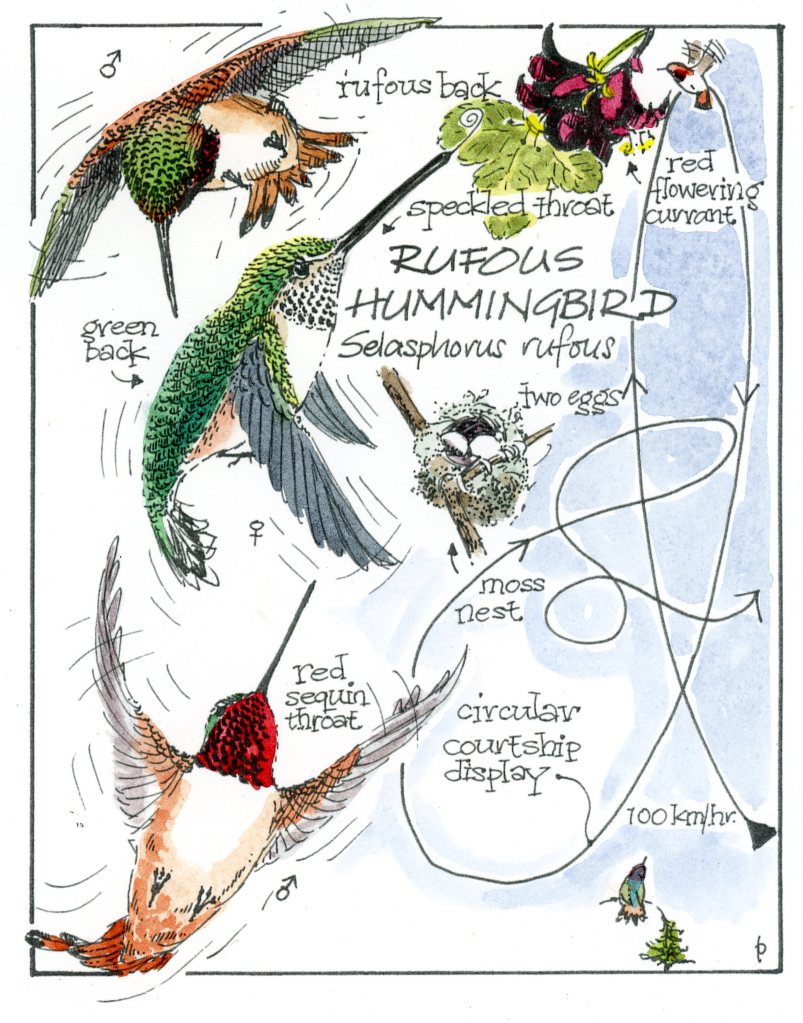
On the eighth day of Christmas, my true love sent to me, eight hummers humming
On the ninth day of Christmas, my true love sent to me, nine seals a swimming
On the tenth day of Christmas, my true love sent to me, ten eagles swooping
On the eleventh day of Christmas, my true love sent to me, eleven hikers hiking
On the twelfth day of Christmas, my true love sent to me, whales a-breaching …

  • We are exploring the possibility that a VIU master’s student could do a practicum project to look into the feasibility of purchasing forested land before it’s logged, to establish the forest as a Yellow Point Green Burial and Memorial Park.
  • We are exploring ways to stop the frogs from being squashed as they cross Tiesu Road. 
  • At our suggestion, the Nanaimo Area Land Trust is looking into ways to make Conservation Covenants on forested lands cheaper and easier to implement. 
  • We are making good progress on The Yellow Point Trail – we have been awarded $400,000 from the Area H gas tax, and a feasibility study will be done by BOCA Engineering in 2022, with construction scheduled to start on the first portion of the trail in 2023.
  • YES has been asked to become a Project Champion for Active Transportation for BC. We’ll find out what that means in due course!
  • The Harmonized OCP for the CVRD has been approved by our Regional Directors, and the process of creating a new Modernized OCP will now begin, for which YES has been invited to form a Community Circle to gather your ideas.  https://www.planyourcowichan.ca
  • We are holding our AGM on Thursday January 27th at 7pm, with guest speaker Suzanne Simard, Professor of Forest Ecology at the University of British Columbia, author of Finding the Mother Tree: Discovering the Wisdom of the Forest. Suzanne is one of the world’s leading forest ecologists, who has forever changed how people view trees, their connections to one another and to other living things in the forest–a moving, deeply personal journey of discovery.  https://suzannesimard.com Registration details to follow.
  • Our presentation by the wonderful Alexandra Morton on The Joy of Wild Salmon can be found here: https://www.youtube.com/watch?v=_JUQmbS6Tso She has been called “the Jane Goodall of Canada” because of her passionate thirty-year fight to save British Columbia’s wild salmon. Her account of that fight in Not on My Watch: How a renegade whale biologist took on governments and industry to save wild salmon is an inspiring roadmap of resistance.
  • Our presentation on Save the Cable Bay Trail Area – What’s Happening? can be found here: https://www.youtube.com/watch?v=x81H58hJK_A 
  • Our presentation on What’s Happening at Fairy Creek? with Elder Bill Jones, Kathy Code, and David Suzuki chiming in, can be found here:  https://www.youtube.com/watch?v=mZ7e6vcpPbE 
  • Our presentation on The Mushrooms of British Columbia, with Andy MacKinnon and Kem Luther, can be found here: https://www.youtube.com/watch?v=ECYsLIjuZTE, and their new book can be found here: https://publications.royalbcmuseum.bc.ca/product/mushrooms-of-british-columbia/ 

Wildwood wants your help to  repatriate six acres to Wildwood

From The Ecoforestry Institute Society: Right next to Wildwood, there are 6 acres of old growth forest that are are critical to save – and we have limited time! Once brought back, the old growth trees will be safe for the rest of their natural lives. The Ecoforestry Institute will implement the same extensive covenants as they do in their other Wildwood Trust protections. The land is a biodiverse, ancient forest with trees older than 500 years, in a very precarious landscape which is becoming increasingly rare on Vancouver Island. Your donation, if you can help us,  will be matched up to $30,000 by other generous donors. https://www.ecoforestry.ca/save-the-6-acres


The Hidden Life of Trees – The Movie

Based on forester Peter Wohlleben’s bestselling book The Hidden Life of Trees, the film follows Wohlleben through forests in Europe and BC as he contends that trees are social beings who share food through their root systems, protect each other from insects and time their blossoming for bumper years that will outstrip animals’ ability to eat all the seeds. Wohlleben is not opposed to all logging, but points out that monoculture plantations are unhealthy; clear-cutting destroys the potential of young trees and heavy machinery does irreversible damage by compacting the soil. There are alternative approaches. A walk in the woods will never be the same after watching this film. The film is full of lovely images, macro close-ups and time-lapse photography. To watch on-line on Amazon Prime, iTunes, Google Play or Vudu, click here: https://thestreamable.com/movies/the-hidden-life-of-trees-2020  Here’s the trailer: https://youtu.be/k_xKhHwqeW8


Monday December 27 The Nanaimo Christmas Bird Count 

From Nature Nanaimo: Do you love watching birds? Then this is your chance! Here’s the map, stretching from Cedar to North Nanaimo: https://www.birdscanada.org/download/cbc/maps/BCNN.pdf

Last year a few people were startled by people appearing to be looking at their houses with binoculars, but don’t worry – they are just interested in your bird feeder! Field observers cover a portion of the circle, counting all birds they find. Feeder watchers count birds at their feeders for a portion of the day. Bird species missed on the count day may be recorded during the count week, which is 3 days either side of count day. These may be rare birds or just something that was missed due to bad weather etc. Owl surveys are particularly valuable. They consist of early morning or evening surveys by listening for owls inside the count circle. Contact Heidi Vanvliet heidi.vanvliet@hotmail.ca, cc to Bryan Vroom bvroom@gmail.com

Here’s some Peaceful Winter Music   https://www.youtube.com/watch?v=N68Ous_DSfc 

And to wrap things up, here’s a jolly Holiday Party Song!  https://www.youtube.com/watch?v=TX9EAavxrus

We wish you a warm, peaceful and happy holiday, from all of us in the Yellow Point Ecological Society

The Ups and Downs of Falling Leaves 

By Pamela Walker and Carolyn Herriot 

Published in TAKE 5 Magazine, October 2021

Soil, on which all life outside the ocean depends, has been created in part by thousands of years of falling leaves. As they fall down, life rises up. It’s the perennial gift that keeps on giving, but a resource that is often overlooked. After a year of drought we should all be stockpiling leaves to use as a protective mulch for next year’s garden. Broken down leaf mould can hold 300 to 500% of its weight in water. Rich topsoil, by comparison, holds about 60%. Leaf mulch holds in moisture, adds organic matter to the soil and provides nutrients to plants. It’s as precious as bullion to plants and beneficial insects, so whatever you do, don’t burn leaves or throw them away in a large plastic bag! 

Continue readingThe Ups and Downs of Falling Leaves 

No Mow May!

Nikki Toxopeus, Yellow Point Ecological Society 

First published in Take 5 – May 2021

No Mow May is fun and a lazy way to start the summer and is a fantastic way to help the birds and the bees.  It is also something we all have the skills to do and it will really help all the wildlife that depends on the creatures and plants in our gardens, meadows, and roadside ditches. If we delay mowing until after the end of May, we may be surprised how quickly Nature responds. So, is there a patch you can protect?

Spring is the season of breeding and feeding young. Birds need their nests undisturbed, and they need bugs and caterpillars to feed their young for a few weeks.  Bird feeders do not cut it for the baby birds.  There used to be a lot more food for the birds but insects are in decline.  Remember when there were many more bugs? All over our windshields? 

Fun facts

Chickadees need to feed their chicks about 500 caterpillars a day for at least two weeks. This can be more than 10,000 caterpillars. 

Land based insects are disappearing at a rate of 1% per year, due to the loss and fragmentation of their habitat.

Globally, pollinator services are worth more than $200 billion a year. 

35% of our food depends on pollinators.


The Yellow Point Ecological Society supports the vision of the Canadian Wildlife Federation and Nature Conservancy of Canada to build a network of interconnected wild yards, hedgerows, fields, rights of way and roadsides that can be left undisturbed during the spring breeding season (and the fall too!). 

If we can make our backyards more pollinator friendly and chat to our neighbours to get them on board with our “new look”, we can have a big impact. Citizen science done by the British organization Plantlife shows that the simple act of No Mow May can increase the number of bees in your yard tenfold. Doug Tallamy’s book Nature’s Best Hope gives wonderful advice on the native species we should plant to turn our back yards into refuges for wildlife.  There is a growing body of knowledge and native plant supplies on Vancouver Island.  The Nanaimo Area Land Trust has started a Pollinators Paradise project, to promote the use of native pollinator-friendly plants and other ways to support pollinators.  They are launching their project web page this month – so watch this space

The Ministry of Transportation is also part of the solution. They are responsible for keeping the vegetation within 1.8 m of the road below 25 cm high, for traffic safety. In May, the Contractors are usually busy cleaning up the gravel and controlling the dust along the roadsides and do not start mowing until June. They delay mowing so they only mow once a season (and save the taxpayers’ money).  Often, they cannot mow for most of the summer due to fire hazards, so the vegetation is brushed or mowed in August or September. If rights of way were planted with low, resilient shrubs and herbaceous native plants which do not need mowing, this might also keep invasive species from dominating.  The Contractor I spoke to said he had worked in areas with healthy ecosystems, where the native vegetation grew in the rights of way and kept the invasive species away.  Invasive plant species do not suit native wildlife but that is a topic for another day.

For now, it would be great to grow the support for No Mow May. It is an easy way to help protect wildlife and their habitats during the sensitive breeding season.  If we must mow, we should mow as high as possible. It will be better for the lawn, and the ground dwelling bees. Perhaps we can create refuges in spaces away from the lawn.  In this way we can mitigate the biodiversity crisis and save our money, time, and energy.

Canadian Wildlife Federation Grow It, Don’t Mow it: https://cwf-fcf.org/en/explore/pollinators/grow-it/

Why ‘No Mow May’ could be a boon for Toronto’s bumble bee populations   https://www.cbc.ca/news/canada/toronto/no-mow-may-toronto-1.5568446

No Mow May – How to get ten times more bees on your lock down lawn https://www.plantlife.org.uk/uk/about-us/news/no-mow-may-how-to-get-ten-times-more-bees-on-your-lockdown-lawn

Nanaimo Area Land Trust: https://www.nalt.bc.ca/