Leave it to Beavers

By Pamela Walker, Take 5 Magazine, November 2025

There are many strange facts about beavers that we Canadians should know just … because. No one has probably seen a nickel lately, but the nation’s animal has graced the coin since 1937.

Source: OpentextBC

Beavers are known mostly for their logging expertise. They can fell a 5” diameter tree in three minutes according to Frontenac News.

Continue reading “Leave it to Beavers”

Who are our Local Green Champions? 

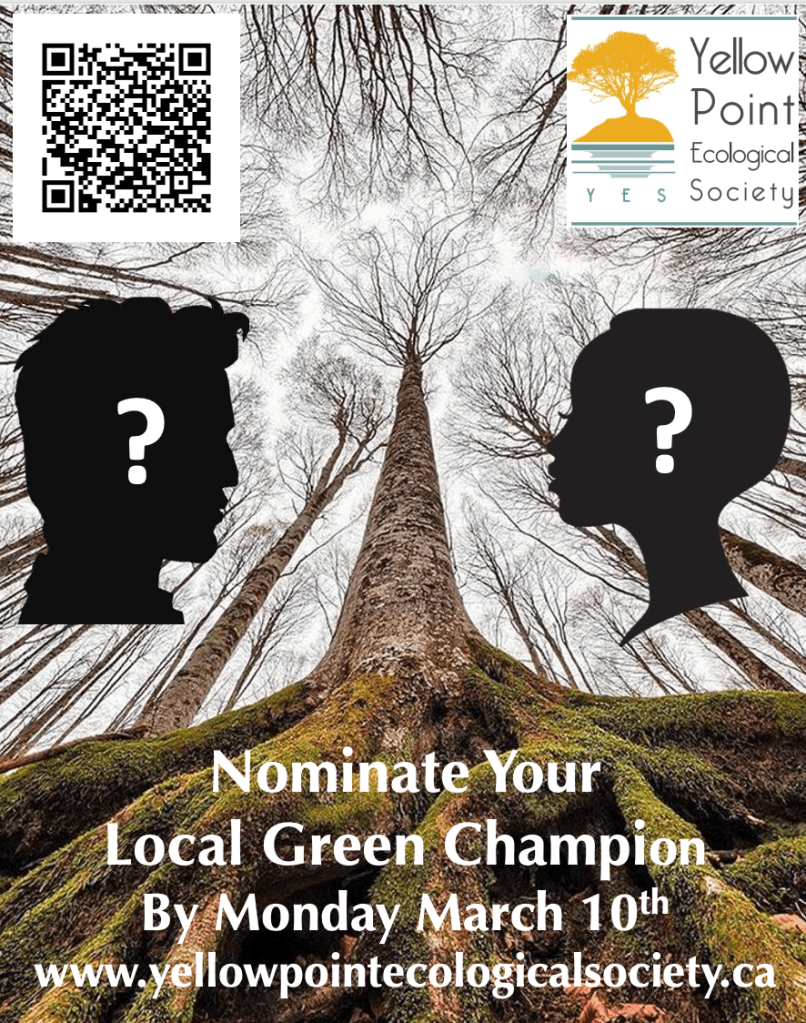
In partnership with Take 5 Magazine, we – the Yellow Point Ecological Society (YES) – are launching a quest to find our Green Champions, and give them the recognition they deserve in the April issue of Take 5.

If you know someone who deserves recognition, please nominate them. Send a 250 words description of their work to yellowpoint2020@gmail.com, along with their name, address, phone, email, and their willingness to be nominated, by Monday March 10th, 2025 (midnight

Our boundaries are the Take 5 readership area, from Crofton in the south to Cable Bay and Jack Point in the north, from the ocean in the east to the mountains in the west. As for Duncan, Nanaimo, and Gabriola – we encourage you to organize your own Green Champions awards!

If there are published stories that reference their work, so much the better – please include the links. If you want to nominate your husband, son, or step-niece twice removed by your second marriage, best find someone else to nominate them. If two or three of you want to nominate someone together, so much the better. 

Do you know a teacher, professor, or school board trustee who goes out of their way to share their love of nature with their students?

Do you know perhaps a local business owner who makes a special effort to minimize waste, avoid harmful emissions, and make a difference on the Earth?

Is there a planner, engineer, city councillor, or Regional Director who you know to be a champion for nature? Perhaps even a Mayor?

Maybe you know an Indigenous person or elder who understands the importance of our connection with nature, and goes out of their way to share their knowledge.

Maybe there’s a volunteer who loves a particular place that is threatened with harm, perhaps due to real estate development or logging, and is working to save it.

Or is there someone who works with children, getting them out into the woods, getting them familiar with the mosses, lichens, and caterpillars, the worms and bugs who live in the soil, the trees and plants, and the birds with whom we share our home?

Maybe you know a farmer who cares about nature on the farm, who goes out of their way to protect nesting birds, to set aside special areas, and grow food without spreading toxic chemicals on the land.

Maybe you know someone who protects nature silently as an investor, avoiding companies that harm nature and investing instead in ventures that restore and protect nature and the climate.

Maybe there’s an author, a children’s book writer, a singer, artist, or a magician who uses their skill to weave inspirational magic and make people fall in love with nature. 

Or maybe you know a scientist who is working to help us better understand the climate crisis, the biodiversity crisis, or the mysteries of plant consciousness. 

And maybe there’s a fisher or a marine biologist who treasures the ocean, who goes out of their way to keep the plastic trash and fishing gear out of the sea.

The judging panel will be the Board of YES, so none of us or our immediate family can be nominated. Sorry, Uncle Jim! The award will be a feature in April issue of Take 5, and a mystery recognition yet to be revealed. Instead of April Fool’s Day, it will be Nature’s Jewels Day. If there’s a business that would like to sponsor this yet-to-be-revealed ceremony, please let us know.

The deadline for nominations is Monday March 10th.

Send them to yellowpoint2020@gmail.com. Thankyou!

The small print:

The Directors of YES are not eligible to be nominated.

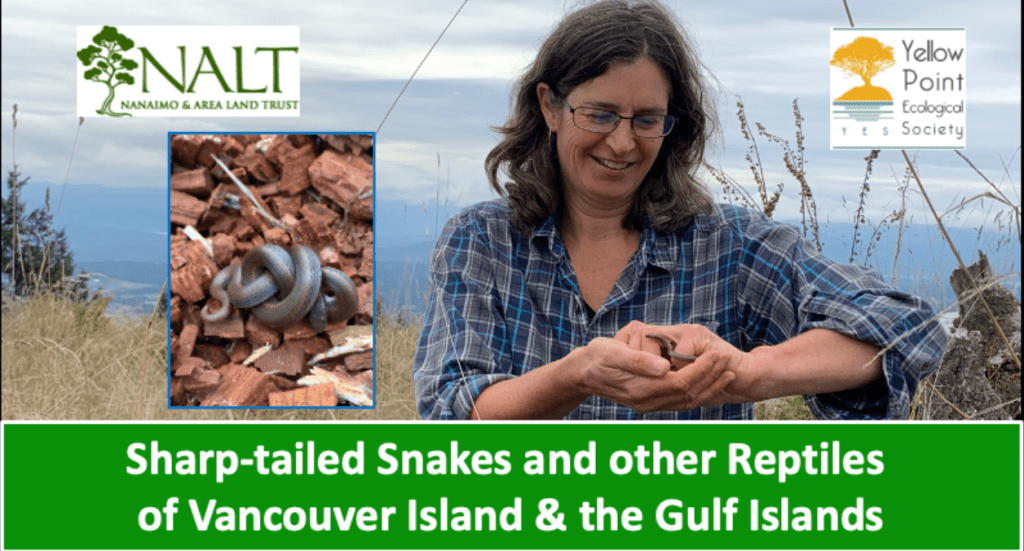
Sharp-Tailed Snakes and Other Reptiles

Here is the video from  Carrina Maslovat’s and Laura Matthias’ presentation https://youtu.be/H7_HeeEQlLE. If you have an area of sun-filled Garry oak meadow on your land, and are interested to set up artificial cover object (black asphalt shingle) to observe if you have these tiny snakes (see below) on your land, please contact Linda Brooymans at the Nanaimo area Land Trust. stewardship@nalt.bc.ca  The video explains all about it.

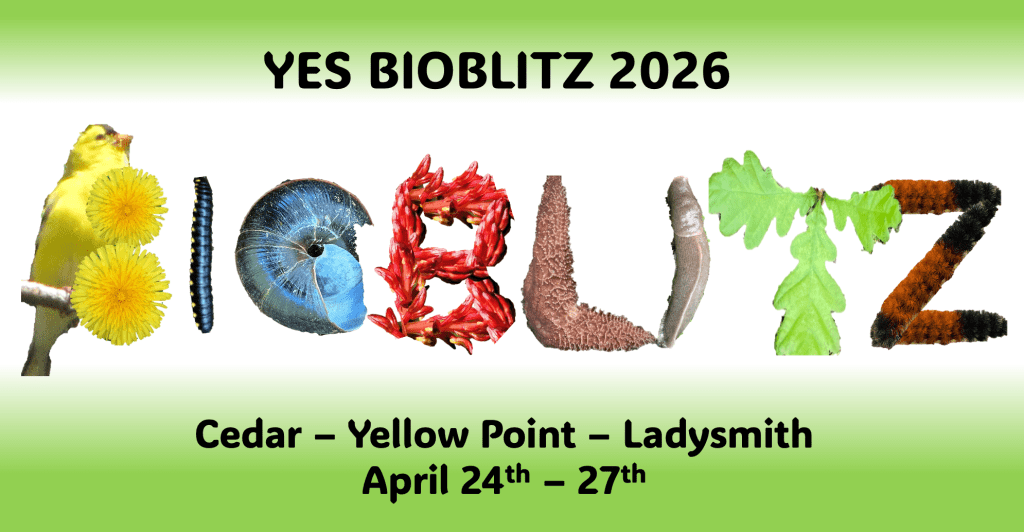
Welcome to the YES BioBlitz 2025

You can sign up here  YESBioBlitz2025 under the community menu.  

(Log in to iNaturalist. )

Why join?

This is such important citizen science, which supports research and helps policy makers protect nature.  Check out how your data makes a difference here. It is also a great opportunity to develop a local community of people who understand and care for nature.

When?

Practice starts now!  This event lines up with the City Nature Challenge across Canada:

April 25th – April 28th Take pictures of wild fungi, plants and animals.

April 29th– May 4th  Upload and identify the species in iNaturalist.

Results will be announced by May 15th.

With whom?

You can do this on your own, with your outdoor class, or with others who you can teach or learn from.  You already have a friendly community of online iNaturalists who are so helpful at this time of year.  Join us at:

  • Saturday April 26th, 10am: Holland Creek Trail walk led by Jen Moss of Friends of Holland Creek.  Meet at the Holland Creek trailhead on Dogwood Drive.
  • Sunday April 27th, 10am: Cable Bay Trail walk led by Jain Alcock-White of Champagne Hill Botanicals.  Meet at the Cable Bay trailhead on Nicola Rd.

What you need – and it’s all free!

All you need to participate in the BioBlitz are:

An iNaturalist account or app, which is free.

A smart phone or camera to capture images or sounds.

A smart phone or computer to upload your images or sounds.

You can use the iNaturalist App or the webpage iNaturalist.ca.

Where to go?

The area for this year’s YES Bioblitz is the same as 2024.  It includes Ladysmith, South Nanaimo, Cassidy, and our coastal waters to the east – see map below.  There are many public parks where you can explore, and there are reserves and private lands where you need permission. NOTE: We do not have permission to enter the Woodley Range Ecological Reserve.

Only photos and sound recordings taken during the designated dates and times (6am on April 25th to 8pm on April 28th) in this geographical location will count towards our YES BioBlitz. Of course, everything entered in iNaturalist, year-round and in other places, is still valuable.  

How?

Check out the resources and links below and note the top tips:

  • Take good pictures – focus properly, fill the frame or crop the picture, take different views.
  • Fill the gaps in local knowledge – go to places or look for species others tend to overlook.
  • Make your data shareable – make sure the location is recorded,  and check that your license settings allows the data to be used.  iNaturalist recommends using CC0, CC BY or CC BY-NC.  Licenses are located under the account settings, in contents and display.

Participate as a school group

There are many great resources on iNaturalist and the Internet on how to participate as a school group, how to take photos that can be identified, and how to use iNaturalist. In some cases you should use Seek, which is a simpler app with more privacy controls, just as educational.  

If you have questions, message us in iNaturalist or email us at yesbioblitz@gmail.com.  If you want to chat, let us have your phone number and we will call back. 

Useful links

Past bioblitzes

How to guides

Other projects in our area!

Protecting Communities and Nature with a New Forest Act

First published in Take 5, September 2024

One winter afternoon in 2021, after a big winter storm, Carolyn and I were enjoying some time off at Cowichan Bay. As we strolled down the dock, expecting to see the sea-lions, we saw instead something that astonished us. The entire sea had turned brown – murky brown. The sea-lions had fled, along with any transient sailors. The fish and ducks had surely fled too. “It happens every year”, we were told. 

Continue reading “Protecting Communities and Nature with a New Forest Act”

The YES BioBlitz 2023 Report

by Nikki Toxopeus

The results are in, the stats are done, and the prizes awarded!

The Yellow Point Ecological Society BioBlitz for 2023 is officially over! Thank you to all our participants and identifiers for making it so much fun and so successful.

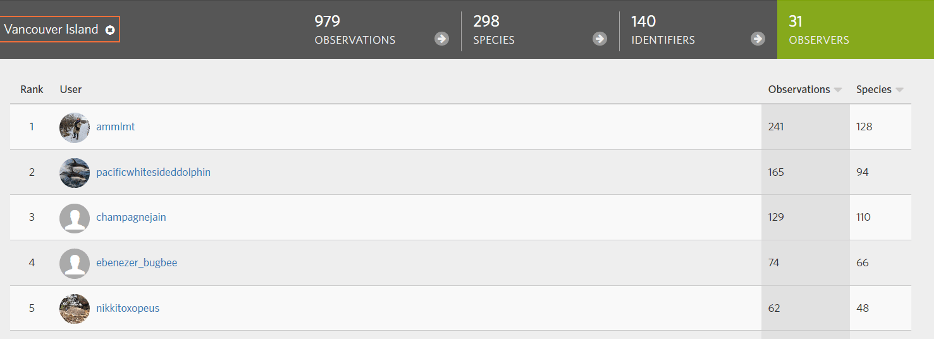
We clocked up a similar number of species as previous years, with fewer observers.  We had 298 research grade species as shown below, thanks to the quality of the observations and the support of the wider iNaturalist community helping ID the entries.

YES board members are not eligible for prizes, and so our prize winners are Annette Lefaivre (visiting from Calgary and helped map the area), Liam Steele (from Ladysmith and an outstanding young naturalist) and Heath Bleau (who recently moved, with his wife Kathy, to Nanaimo). Annette and Heath received a set of 10 Briony Penn Nature cards, and Liam was persuaded to accept a BC Museum Mushroom book, in part as a thank you for all his work helping to ID species.

We also awarded a school prize to the Grade 3 class at the Stz’Uminus Community School, who joined the BioBlitz for the first time and will be presented with a set of the Pacific North West Plant Knowledge Cards and a set of Briony Penn’s Nature posters.

Our results compared to last two years (given in brackets) are as follows:

Observations 1847 (2004, 2289)
Species 538 (556, 508)
Identifiers 165 (178, 252)
Observers 38 (47, 62)

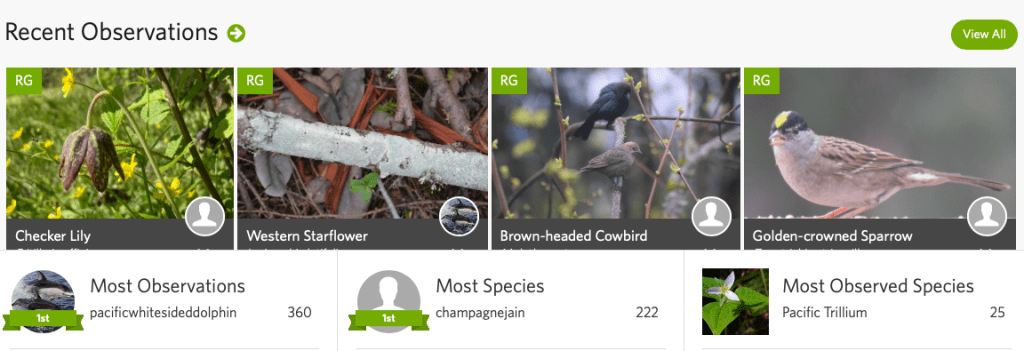
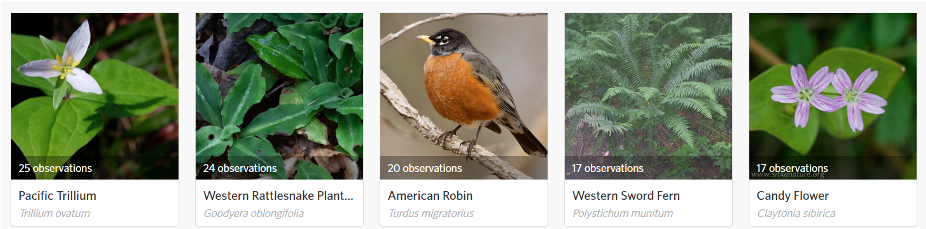
This year, the most observed species were


Pacific Trillium (Trillium ovatum) was the most observed and by the most people.
Western Rattlesnake Plantain (Goodyera oblongifolia) was spotted multiple times by a few people.
The Great Blue Heron (Ardea herodias) was the top observed species last year and no one recorded it this year.

Other notable differences were that there were only 4 sightings of the Bald Eagle (Haliaeetus leucocephalus), Devil’s club (Oplopanax horridus) was absent this year, and western meadow rue (Thalictrum occidentale) was seldom seen. 

The most observed species aligns with my experience of this season – the trilliums were out in force, the robins were furiously nesting and dominating the dawn chorus, and I did not see the Great Blue Heron by the Ladysmith Marina (but they are back now).

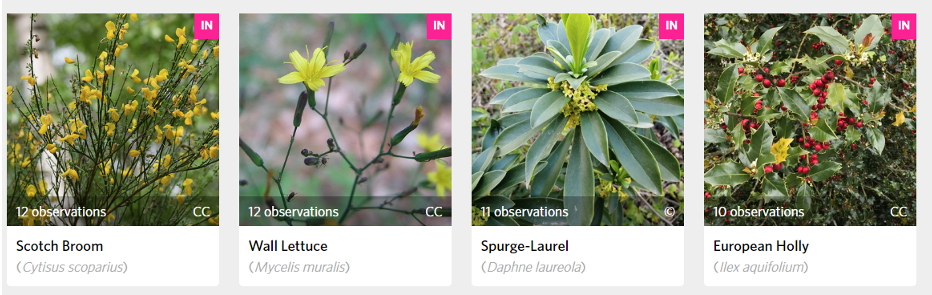
The top introduced and invasive species recorded remain:
Scotch Broom (Cytisus scoparius) – located along Cable Bay Trail, in Joan point Park, Holland Creek Park, Holland Creek Estuary Trail, Haslam Creek, near yellow Point Lodge and along power line ROWs.  Broom cuts are planned for some of these locations.
European Holly (Ilex aquifolium) – located in Stocking Creek Park, Holland Creek Park, Morden Colliery, Kinsman Park, Estuary Trail, and other roadsides
Spurge-laurel (Daphne laureola) – all the above parks!!

I will be using and adding to this data set to help determine where we need to remove invasives from our parks and other special areas.

There was some great teaching and learning happening in the online chatter. Next year let’s expand the learning to the field, organise some group walks and take the iNater chatter to the field.

See you same time, same place next year!  Reserve April 26-29th 2024 for getting out in nature with your friends, family, and other naturalists. This date aligns with the global City Nature Challenge BioBlitz and we hope Nanaimo and other Vancouver Island Cities will join in again.

Many thanks! – Nikki Toxopeus

YES Videos

Green Burial – Learning from Salt Spring

Conservation Communities: Can They Help Save Our Local Forests?

The Nanaimo Watershed – How Can We Protect and Restore It?

Invasive Plants on Vancouver Island – What Can We Do?

The Joy of Wild Salmon, with Alexandra Morton

The Mushrooms of British Columbia

Save the Cable Bay Trail Area – What’s Happening?

What’s Happening at Fairy Creek?

The Case for a Multi-Purpose Yellow Point Trail

Welcome to the Koksilah Watershed, with Heather Pritchard

Wild About Gardening: Creating a Landscape that Welcomes Wildlife, with Claudia Copley

Why Landscape Context Matters in Wetland Conservation, with Elke Cole

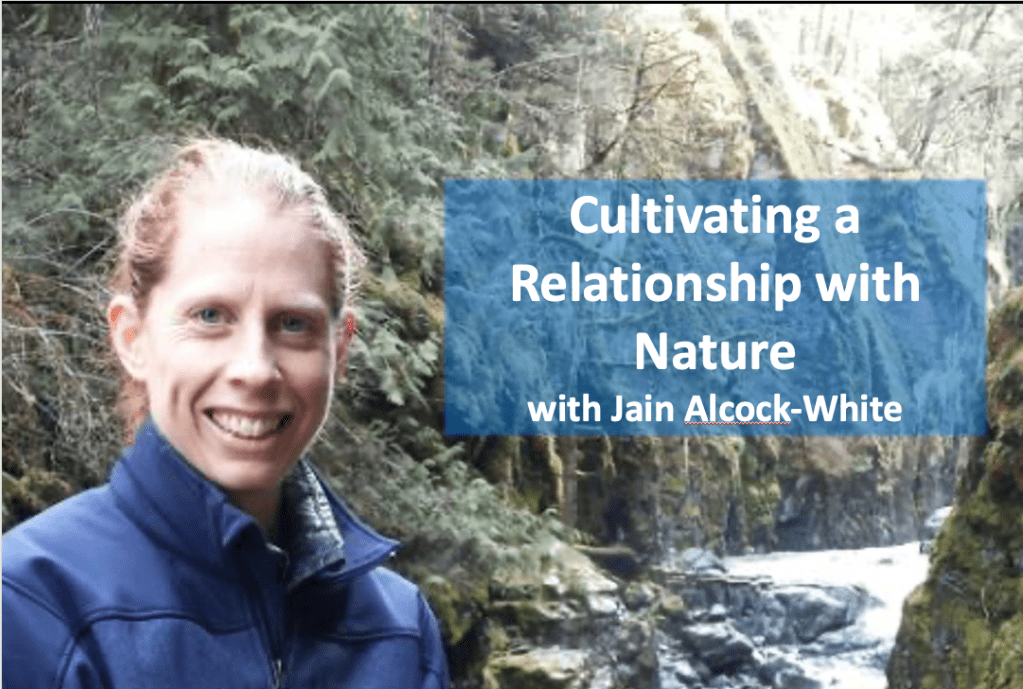
Cultivating a Relationship with Nature, with Jain Alcock White

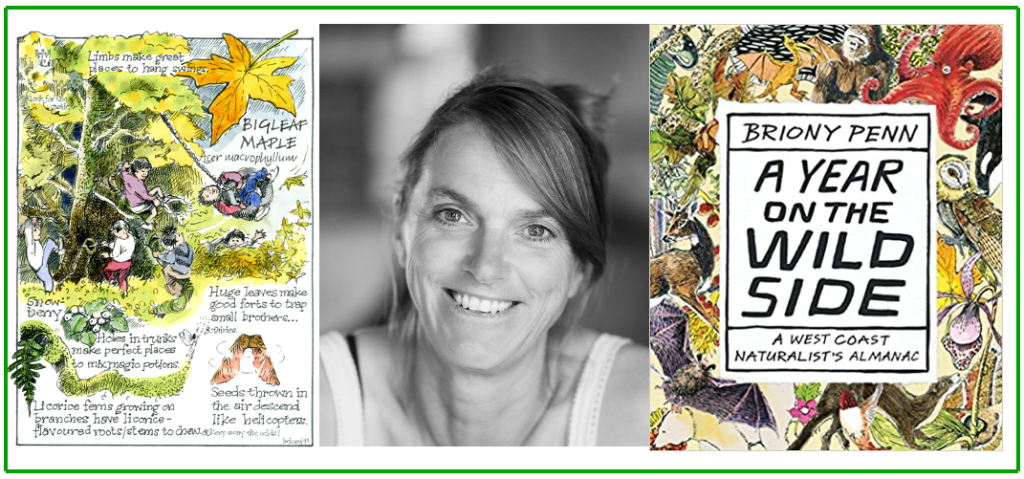
Briony Penn, Author, Artist and Naturalist

How Can We Protect The Forest on Private Land?

No Mow May!

Nikki Toxopeus, Yellow Point Ecological Society 

First published in Take 5 – May 2021

No Mow May is fun and a lazy way to start the summer and is a fantastic way to help the birds and the bees.  It is also something we all have the skills to do and it will really help all the wildlife that depends on the creatures and plants in our gardens, meadows, and roadside ditches. If we delay mowing until after the end of May, we may be surprised how quickly Nature responds. So, is there a patch you can protect?

Spring is the season of breeding and feeding young. Birds need their nests undisturbed, and they need bugs and caterpillars to feed their young for a few weeks.  Bird feeders do not cut it for the baby birds.  There used to be a lot more food for the birds but insects are in decline.  Remember when there were many more bugs? All over our windshields? 

Fun facts

Chickadees need to feed their chicks about 500 caterpillars a day for at least two weeks. This can be more than 10,000 caterpillars. 

Land based insects are disappearing at a rate of 1% per year, due to the loss and fragmentation of their habitat.

Globally, pollinator services are worth more than $200 billion a year. 

35% of our food depends on pollinators.


The Yellow Point Ecological Society supports the vision of the Canadian Wildlife Federation and Nature Conservancy of Canada to build a network of interconnected wild yards, hedgerows, fields, rights of way and roadsides that can be left undisturbed during the spring breeding season (and the fall too!). 

If we can make our backyards more pollinator friendly and chat to our neighbours to get them on board with our “new look”, we can have a big impact. Citizen science done by the British organization Plantlife shows that the simple act of No Mow May can increase the number of bees in your yard tenfold. Doug Tallamy’s book Nature’s Best Hope gives wonderful advice on the native species we should plant to turn our back yards into refuges for wildlife.  There is a growing body of knowledge and native plant supplies on Vancouver Island.  The Nanaimo Area Land Trust has started a Pollinators Paradise project, to promote the use of native pollinator-friendly plants and other ways to support pollinators.  They are launching their project web page this month – so watch this space

The Ministry of Transportation is also part of the solution. They are responsible for keeping the vegetation within 1.8 m of the road below 25 cm high, for traffic safety. In May, the Contractors are usually busy cleaning up the gravel and controlling the dust along the roadsides and do not start mowing until June. They delay mowing so they only mow once a season (and save the taxpayers’ money).  Often, they cannot mow for most of the summer due to fire hazards, so the vegetation is brushed or mowed in August or September. If rights of way were planted with low, resilient shrubs and herbaceous native plants which do not need mowing, this might also keep invasive species from dominating.  The Contractor I spoke to said he had worked in areas with healthy ecosystems, where the native vegetation grew in the rights of way and kept the invasive species away.  Invasive plant species do not suit native wildlife but that is a topic for another day.

For now, it would be great to grow the support for No Mow May. It is an easy way to help protect wildlife and their habitats during the sensitive breeding season.  If we must mow, we should mow as high as possible. It will be better for the lawn, and the ground dwelling bees. Perhaps we can create refuges in spaces away from the lawn.  In this way we can mitigate the biodiversity crisis and save our money, time, and energy.

Canadian Wildlife Federation Grow It, Don’t Mow it: https://cwf-fcf.org/en/explore/pollinators/grow-it/

Why ‘No Mow May’ could be a boon for Toronto’s bumble bee populations   https://www.cbc.ca/news/canada/toronto/no-mow-may-toronto-1.5568446

No Mow May – How to get ten times more bees on your lock down lawn https://www.plantlife.org.uk/uk/about-us/news/no-mow-may-how-to-get-ten-times-more-bees-on-your-lockdown-lawn

Nanaimo Area Land Trust: https://www.nalt.bc.ca/

The YES Nature Photo Contest

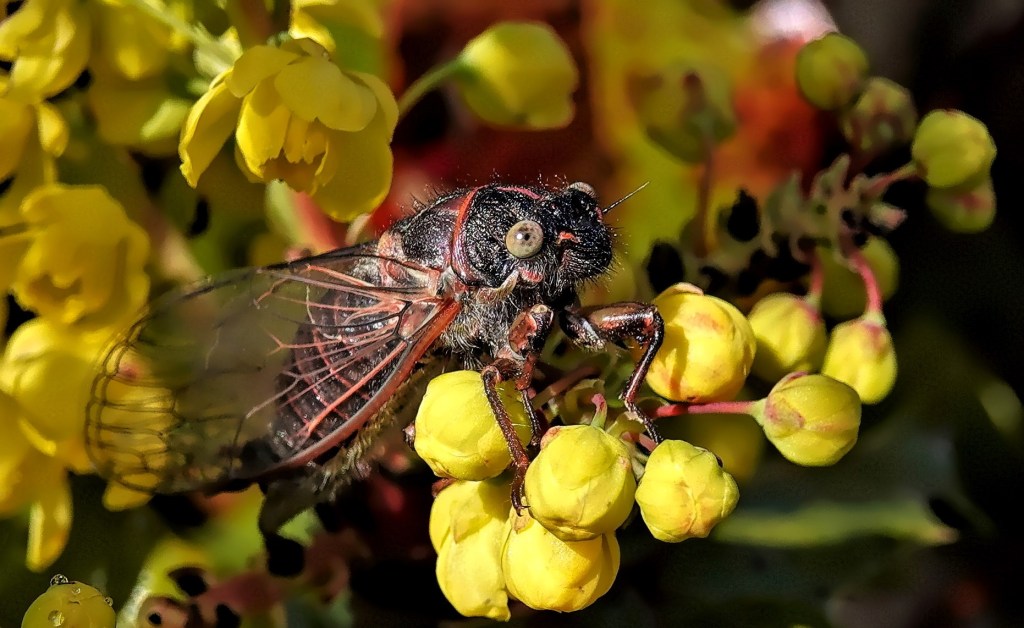
The Yellow Point Ecological Society is happy to announce the $250 Winner of our Nature Photo Contest: 

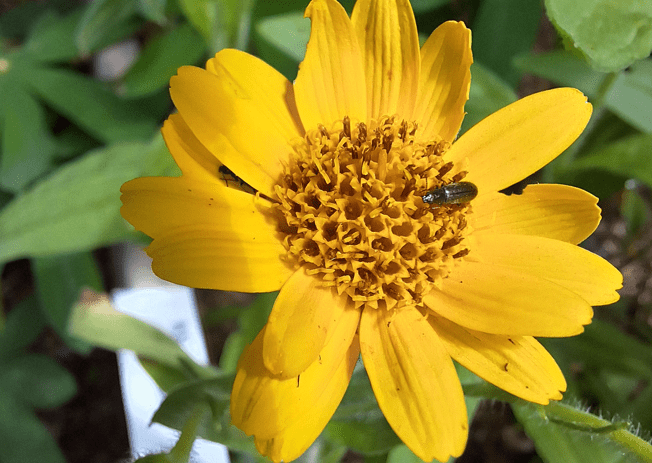
Lynda Stevens, for her gorgeous photo of a Salmonfly Cicada resting on an Oregon Grape flower.

Lynda lives in South Nanaimo, and she got seriously into amateur photography when she moved here from Nelson five years ago, starting with her love of birds then moving onto insects. 

She loves the parks and trails around Cedar and Yellow Point, and she took the photo in early spring close to the Coco Café in Cedar, at the start of the Morden Colliery Regional Trail, using an ordinary point-and-shoot camera – a Sony RX104 with a variable range lens. 

Congratulations, Lynda!

Twelve Ways to Protect the Forest

4722ce852345f5bbea12e17e2a8eb164

  1. Deepen Your Love

Go wandering. Find a place where you can sit and listen quietly to the poetry of the forest. Take time to look at the different trees, to observe the way they grow. Learn the names of the ferns, wildflowers, and forest birds. Find a space to lie down and gaze up, and wonder. The forest has been here for a long, long time.

  1. Learn about the Forest Ecosystem

The forest ecosystem on Vancouver Island is 12,000 years old. Until loggers started clearcutting in the 1940s every forest was an oldgrowth forest, with trees up to a thousand years old. This is the astonishingly rich ecosystem we have lost – but it is slowly returning with each successive year that a forest is not clearcut.

The integrity of the forest is essential for the health and resilience of our watersheds and our drinking water, since the forests filter and clean the water. It is essential for all the wildlife for whom it is home. It is essential for carbon storage, making protecting the forest a key solution to the climate emergency.  If you visit Wildwood you can join a workshop or a forest tour where you can learn more about the forest ecosystem.

We also suggest these books:

  1. Find Other Forest-Lovers

 Working to protect the forest will be more effective if you can find friends who share your concern, and work with them to make a difference. It will also be more fun. These are some of the groups that are working to protect the forest here on Vancouver Island:

  1. Understand Just How Little Protection The Forest Has

When it comes to the law and regulations intended to protect the forest there are four different forest jurisdictions on Vancouver Island:

  • Crown Land. 80% of the forest on the Island, including most of the oldgrowth. This is governed by the Forest and Range Practices Act, which is ecologically very weak, and currently undergoing a review.
  • Private Managed Forest Land. Most of the forest on the east side of the Island up to Campbell River that was in the E&N Rail Grant. This is managed through the Private Managed Forests Program, which is also ecologically very weak, and currently undergoing review.
  • Community Forests. Forested land owned by a municipality, such as North Cowichan’s Municipal Forest Reserve, the management of which is governed by the elected councillors.
  • Private Forest Land. Most of the forest in developed areas along the coast is privately owned. Its management is governed by provincial laws regarding fish and water, and by Regional District bylaws. Forested land adjacent to a creek, lake or wetland gets some protection, though with weak enforcement and minimal penalties for damage done, but other private forested land has no protection at all: it has been ecologically abandoned.
  1. Ask Your Regional District to Do More to Protect the Forest

This is an area that has not been explored much, since many people believe that governments should not interfere with a private landowner’s rights. These rights are already governed by zoning laws and bylaws, however, and by Development Permit Area rules, so there’s good reason to engage with the rules. Often, where forested land is in a Development Permit Area (DPA), there are many exclusions that make the rules irrelevant. We need to discuss ways in which DPA exclusions can be reduced, and the DPAs themselves can be widened to allow logging using ecoforestry principles, while ending clearcutting.

  1. Ask the BC Provincial Government to Do More to Protect the Forest

Members of organizations such as the Sierra Club and the Ancient Forest Alliance have been working for years to try to influence government forest policy, but so far, it has been a slow, uphill struggle. In the 1990s we had success in protecting various areas completely, such as the Carmanah, parts of the Walbran, and the development of the 1990s Forest Practices Code. That was abandoned under successive BC Liberal governments, but we hope for more success under the current NDP/Green Party Alliance. Oldgrowth forests the size of 34 soccer fields are still being clearcut every day, and only 10% of the biggest old trees are left. You can send a letter to Minister Doug Donaldson here.

  1. Restore Damaged Forest Habitat

All over the world, forests are in need of restoration. This is a big topic that people study in universities. If you know of land locally that is in need of restoration, you can plant trees, making sure to install a deer-protector for each sapling. You can also ask your friends to help you clear invasive species such as broom, using advice on how and when to cut from Broombusters.

If it’s a creek or stream that needs restoration, this is a more complex matter that needs care and skills. Dave Polster has some good advice.

  1. Use Ecological Care when Altering Forested Land

If you want to build a home or a workshop, or clear a a spot for a tiny home, the most useful advice is Don’t Rush In. Live on your land for a year to see where the sun falls, where it floods in winter, which way the wind blows, and which species live where. If you cluster buildings together, there will be much less damage to the forest. You may have friends who say “It’s okay to clearcut the forest because it will grow back,” but in areas where the forest has been cleared such as Timberlands south of Cassidy, and along the Nanaimo River Road the temperature on the ground can be ten or twenty degrees warmer on hot days, compared to within the forest. Deer may eat any new trees that try to get established, and the ‘new normal’ of the climate crisis with its extended summer droughts may mean that the forest never grows back.

If you are thinking of working in a riparian area close to water it’s important to know that fish, frogs and salamanders breed in the water and spend much of their lives in riparian areas, as do many birds, invertebrates, including dragonflies, snails, slugs, and native pollinators like bumblebees and butterflies. For these reasons, it’s important to protect riparian areas:

  • Don’t clear the vegetation. What may seem messy to us is an undisturbed paradise for fish, birds and dragonflies.
  • Don’t use herbicides or pesticides near a riparian area.
  • Don’t allow livestock there, since they will cause damage by trampling and grazing, releasing sediments that could degrade spawning habitat for kilometres downstream, while their wastes can be a source of harmful bacteria like E. coli, harming downstream fish and other creatures.
  • Don’t dump grass clippings or pruned branches, since they can smother the native vegetation and introduce invasive species such as ivy, Japanese knotweed or flag iris.
  • Don’t dredge, channel or alter the water itself.
  • Don’t dig or extract soil from a riparian area.
  • Don’t build a driveway in a riparian area.
  • Don’t let a septic field drain into a riparian area.

In the CVRD, development is not allowed:

  • within 30 metres on either side of a stream, measured from high-water mark;
  • within 30 metres of the top of a ravine that’s less than 60 metres wide with a steep 3:1 slope;
  • within 10 metres of the top of a ravine more than 60 metres wide with a steep 3:1 slope.

In the RDN, riparian setbacks range from 9 meters to 30 metres depending on the slope of the land and the nature of the watercourse.

  1. Practice Ecoforestry

If you own a parcel of forest and you manage it ecologically using ecoforestry methods you will speed its restoration to its original oldgrowth character. A good way to learn about ecoforestry is to attend a workshop at Wildwood: it’s all about retaining the canopy, preserving the strong seed trees, preserving wildlife trees and protecting the soil. Here’s a short video that can get you started.

  1. Place a Conservation Covenant on Your Forested Land

If you own a parcel of forest and you want to protect it forever, you can work with a Land Trust to place a Conservation Covenant on it. This will bind future owners to protect it, with a heavy penalty for a breach of the covenant and a requirement for restoration. The downside is that it will cost you around $25,000:  $12,000 for surveying and legal work and $12,000 for the Land Trust whose staff and volunteers will need to visit the land to monitor the covenant every year or so, for eternity. One option is to write the wish that you want your land covenanted into your will, leaving money to cover the cost. On Vancouver Island, you can discuss placing a covenant on your land with these organizations:

  1. Take Action If You Learn that a Forest May Be Harmed

You have heard a rumour that a forest you love is threatened with being clearcut. What to do?

  • First, call a friend or two, so that you can discuss the problem together. Then gather as much information as you can.
  • Next, ascertain if the land is private, private managed forest land or Crown land. If it is not private, you will need to contact the Ministry of Forests and try to learn more about the rumour.
  • If it is privately owned and within a municipality, contact the municipal planning department and ask what they know about the planned activity. If it is privately owned and in a rural area, contact your Regional District and ask the same. The landowner may or may not have been required to apply for a development permit. If he or she has, you can ask to see the permit and any requirements it may contain.
  • If the chainsaws or feller-buncher machines are already at work, try to take a close look at their work, to ensure that they are doing what is required to protect the riparian area, and to stick to the rules (see #8 above). If they are not, call the 24-hour RAPP line (Report all Poachers and Polluters) to report a violation: 1-877-952-7277 or #7277 on the TELUS Mobility Network.
  1. Work Towards an Ecological Democracy in which Nature’s Rights are Protected

We need to develop a vision of the future in which Nature is respected and protected. We need to hold a clear intention that forests will be valued for all that they offer, with proper protection under the law. The trees and wetlands cannot speak for themselves: we have to speak for them: that is what ecological democracy means. And they need rights.

Christopher Stone, a law professor at the University of Southern California, has written that just as we have given legal status to non-human entities such as ships and corporations, society should also give legal rights to forests, oceans, rivers and other so-called ‘natural’ objects in the environment. Corporations cannot speak either: lawyers speak for them. In 2017, New Zealand’s lawmakers granted the Whanganui River the legal rights of a human, ensuring that it will be represented by guardians in all legal matters that concern the waterway.

Yellow Point Ecological Society, November 2019