Cable Bay Lands (West Side) Public Hearing

Greetings!

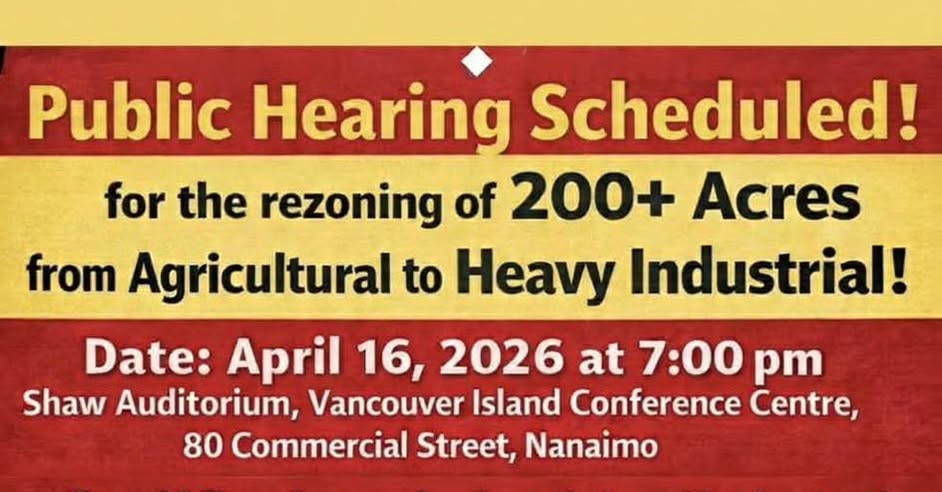
This Thursday evening April 16th 2026 is very big for the lands around the much-loved Cable Bay Trail.

Nanaimo City Council is holding a Public Hearing starting at 7pm after which they will vote on a zoning bylaw to change the status of the lands WEST of the trail from Rural Resource (AR1) to Heavy Industry. 

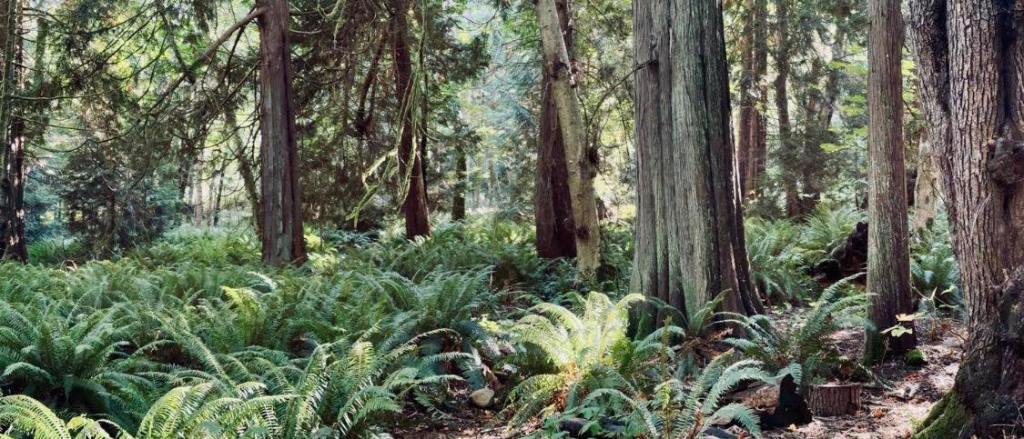
The lands EAST of the trail are not up for discussion, but it’s important that we tell council they MUST be protected, one way or another.
The lands on the west side are owned by Nanaimo Forest Products Limited (NFPL), who have proposed industrial lots as close as 50 m from the trail.
Screenshot

In-Person Submissions: Anyone who attends the Public Hearing can speak for up to 3 minutes.  The protocol for these events is no clapping, and no calling out. Hand-held signs are allowed. And please be respectful – insults and anger will backfire, and give us all a bad name. Come prepared to be there until 11pm.

If there are still people at the  mic at 11pm, the meeting will be adjourned, and continue next Wednesday, April 22nd, in the same place.

You can speak twice, after others have spoken, but you woud be wise to state that your second presentation brings new information. 

Written submissions must be provided by 2pm April 16, to ensure they are received by Council:

ONLINE: Submit written comments directly through the City’s website at www.nanaimo.ca/publichearing or  by email to public.hearing@nanaimo.ca

MAIL: City of Nanaimo, Planning & Development, 455 Wallace Street, Nanaimo BC, V9R 5J6, headed ‘550 Phoenix Way Rezoning”

BY DROPBOX: : Deposit in the drop box outside the Service and Resource Centre, a11 Dunsmuir Street. 

What should we be saying?

There are two approaches, and most people are supporting one or the other. Diversity is important. Everyone’s thoughts are valid. There is no “right” or wrong”. 

One approach is that we need to protect these ecosystems and 

make the entire area a park for all to enjoy.  21,000 people have signed a Petition requesting that the area become a park, and most of the written submissions support this simple “Say NO” approach to development of any kind. 

The other approach is being taken by those who accept that the land was agreed on as “industrial” in the city’s Official Community Plan, after a lot of public engagement, and that there’s a strong will within council to approve rezoning to heavy industrial (I-4), because there is a shortge of such land in the area. This group of people are arguing for a delay, however, and a subsequent improvement of the rezoning bylaw, because (among other things):

  • (a) the proposed zoning bylaw has been badly crafted, and has internal contradictions. For example, the environmental report says “no net water loss”, which would require pervious surfaces, while the Site Servicing report requires a single perimeter drain to catch water run-off, which would badly imact the forest alongside the Cable Bay Trail;
  • (b) engagement with the Snuneymux First Nation is incomplete; 
  • (c) the proposed buffer zone next to the trail is “average 100 metres”, and only 50 metres right next to the trail. It should be a firm 100 metres or more;
  • (d) the plan allows for the cutting of 7,390 trees and their replacement with 9x seedlings. The Sensitive Ecosystems Development Permit Area (DPA) that covers the land only allows for the felllng of 4 trees without special consent. Once cut, the land will be taken over by invasive broom, which is almost impossible to eradicate, and becomes a fire risk;
  • (e) the staff report on the health and other impacts of heavy industrial air and water pollution that council voted for has not been completed;
  • (f) the potential to write a Climate Action Development Permit Area for the land has not even been considered. This would enable some degree of control over future activities on the land, and the development of a more envirtonmentally friendly approach to development, minimizing the felling of trees, among other things. See here and here

The Agenda for the Public Hearing is here: https://pub-nanaimo.escribemeetings.com/Meeting.aspx?Id=0a021b08-0b06-40cb-940a-5d501abdef3e&Agenda=Agenda&lang=English

The filed paperwork for the project is here (scroll down): https://www.nanaimo.ca/whatsbuilding/Folder/RA000503

The Staff report  is here: https://www.nanaimo.ca/whatsbuilding/Files/RA000503/RPT_C260323RA503_950PhoenixWay_AgendaCopy.pdf

The rezoning site plan is herehttps://www.nanaimo.ca/whatsbuilding/Files/RA000503/ra503%20Plan_Site%20Survey%20REV%2024OCT24.pdf

The Aquaparian Environmental Assessment of the land is herehttps://www.nanaimo.ca/whatsbuilding/Files/RA000503/ra503%20Rpt_Environmental%20Assessment%20REV%2026MAR16_Redacted.pdf

The Public Submissions received so far are here:https://www.nanaimo.ca/docs/property-development/development-applications/public-hearing-docs—ongoing/ra503-950-phoenix-way—submissions_redacted.pdf

At the time of writing, there are 194 submissions: 192 opposed, only 2 in favour.   The Snuneymuxw First Nation has written a strongly worded letter opposing the rezoning because they are in the middle of an engagement process with the City to resolve significant issues regarding the lands, and this process is NOT complete.

Nanaimo’s “what happens?” sheet on Public hearings is here: https://www.nanaimo.ca/docs/cannabis/crs-public-hearing-information-sheet.pdf

We hope to see you on Thursday!

Poetry in the Forest

PoetryThese are the poems that we shared in the forest on a wonderful May morning full of wildflowers. Enjoy!

At Blackwater Pond

by Mary Oliver, a poet from Ohio, aged 82

At Blackwater Pond the tossed waters have settled after a night of rain.
I dip my cupped hands.
I drink a long time.
It tastes like stone, leaves, fire.
It falls cold into my body, waking the bones.
I hear them deep inside me, whispering …
Oh what is that beautiful thing that just happened?


That Patch of Wilderness

by Lacey Clark, a young woman who lives in a tiny home the Cowichan Valley

We are like that patch of wilderness
Though the streets are paved with concrete
I see the vibrant bursts of life push their way through the cracks
with unfaltering determination
Bold in their blatant disregard
At mans attempt to cover their wildness
Though I may shade my softness with downturned lashes
I too
Yearn to push through the cracks of my lids
To share the light of my sameness
To be recognized from under the concrete
Of my expression
As the brambles of the blackberry
I too
Can yield a thorny exterior
Vines of prickles may climb my words
An attempt to protect the sweet fruit that is
Myself
May the birds of truth steal the seeds
of my longing and spread them far
That I may grow
Diversely
Over the earth
I see you, the wilderness
Breathing deep under the city
Your time of hibernation almost up
I feel your listlessness.
Deep in my bones

Prayer of the Woods

By Veiga Simoes, a Portuguese writer, journalist, politician, diplomat and historian. While he was the Portuguese ambassador in Berlin, he signed visas that saved many Jews in World War II. This poem was written in May, 1914.

I am the heat of your hearth on the cold winter nights,
the friendly shade screening you from the summer sun,
and my fruits are refreshing draughts quenching your thirst as you journey on.

I am the beam that holds your house,
the board of your table, the bed on which you lie,
and the timber that builds your boat.

I am the handle of your hoe,
the door of your homestead,
the wood of your cradle,
and the shell of your coffin.

I am the bread of kindness and the flower of beauty.
Ye who pass by, listen to my prayer:
Harm me not.

My Heart Soars

by Chief Dan George, past chief of the Tsleil-Waututh (slay-wah-tooth) First Nation, an actor, poet and author.

The beauty of the trees, the softness of the air, the fragrance of the grass, speaks to me.

The summit of the mountain, the thunder of the sky, the rhythm of the sea, speaks to me.

The strength of the fire, the taste of salmon, the trail of the sun, and the life that never goes away, they speak to me.

And my heart soars.

Trees

By Alfred Joyce Kilmer, American poet. He wrote this poem in 1913; he was killed by a sniper’s bullet in July 1918, while serving in World War One, at the age of 31.

I think that I shall never see
A poem lovely as a tree.
A tree whose hungry mouth is pressed
Against the earth’s sweet flowing breast;
A tree that looks at God all day,
And lifts her leafy arms to pray;
A tree that may in Summer wear
A nest of robins in her hair;
Upon whose bosom snow has lain;
Who intimately lives with rain.
Poems are made by fools like me,
But only God can make a tree.

Something About A Forest

By Sophia White, 18 years old; she lives in the Appalachian Mountains in America

There’s just something about a forest
That makes the turbulent soul fall still
And listen to the mournful dirge
Of the solemn whipporwhill.

There’s just something about a forest
That makes closed eyes want to look
At the rippling, tippling kaleidescope
Of the steady-flowing brook.

There’s just something about a forest
Than makes the angry gazes see
The regal and majestic might
Ot the ancient maple tree.

There’s just something about a forest
That makes the most stubborn will learn
To praise the bashful beauty
Of the pale green, newborn fern.

There’s just something about a forest
That awakens weary souls
With the fresh rejuvenation
That only a forest holds.

The Cedar and Fir Tree Lovers

by Ray Lucero, an American poet

During a spring day walk through a primeval rain forest,
We encountered on a steep hillside two old growth trees,
One a Western Red Cedar the other a Douglas Fir.
Incredibly the two giants seemed joined together near ground level.
How could this be?
After all they were of two different species!

Our minds quickly filled with possibilities;
Were they just fused for mutual support?
Were they some kind of cross breed,
If so could they propagate?

We concluded that they were married.
“For better or worse, in sickness or in health”
Unheard wedding vows save for their tall fellows,
Standing silent witness.

We imagined their roots beneath ground,
Forever entwined in lifelong bliss.

We pondered what might happen when age and disease,
Toppled one of these magnificent lovers?
Would the other grieve?
Would the surviving lover stand witness…
As flora and fauna lay claim to the bountiful offering,
Of the fallen giant sacrificed to them?

Would the surviving lover wither and die or choose life?

We then realized that diversity, cooperation, and love are
Earthly traits celebrated by all living plants and animals.

We left the forest in awe and inspired by,
“The Cedar and Fir Tree Lovers”

How Can It Be Time?

By Doug Makaroff, an urban planner and developer who lives in Victoria. Doug founded the Elkington Living Forest Community, a forest ecological hamlet south of Shawnigan Lake, which saved 800 acres of forest by the use of residential clustering on 15% of the land.

How can it be time
for the acorns to bud already?
The summer’s only just begun
and not weeks since the precious
pale leaves of May emerged.
But now the next generation appears
small firm green expressions of fertility
held sunward by dappled waxen leaves
hardening against a backdrop of grizzled bark.
The grass beneath the trees
withers but is not dead.
The camas flower too will see another season.
This landscape unfolds in so many
stages of birth, life, decay, death combined.
Oh, that my heart could grasp and hold the
mystery of the self-addressed envelope of LIFE.

One final paragraph of advice

By Edward Abbey, an American author and essayist noted for his advocacy of environmental issues, his criticism of public land policies, and his anarchist political views. His best-known works include the novel The Monkey Wrench Gang, which has been cited as an inspiration by many environmental groups.

One final paragraph of advice: Do not burn yourselves out.
Be as I am – a reluctant enthusiast, a part-time crusader, a half-hearted fanatic.
Save the other half for yourselves and your lives for pleasure and adventure.

It is not enough to fight for the land; it is even more important to enjoy it.

While you can.

While it’s still here.

So get out there and hunt and fish and mess around with your friends, ramble out yonder and explore the forests, encounter the grizzly, climb the mountains, bag the peaks, run the rivers, breath deep of that yet sweet and lucid air, sit quietly for a while and contemplate the precious stillness, that lovely mysterious and awesome space.

Enjoy yourselves, keep your brain in your head and your head firmly attached to the body, the body active and alive, and I promise you this one sweet victory over our enemies, over those desk-bound people with their hearts in a safe deposit box and their eyes hypnotized by desk calculators.

I promise you this: you will out live the bastards.


We Heard No Owls

By Richard Arnold, an English prof at VIU, a great environmentalist and a fabulous man who died last year. He led many hikes up Mount Benson for the VIU community. Rachel Cooper, one of our Yellow Point Ecological Society members, says that this poem about the owls became real for her after Wyndlow’s logged 40 acres at the end of Doole Rd.

We did not hear a single owl this winter.
Our neighbor logged his hundred acres clean,
And now deep midnight wild has lost its splendor.

He claims that he’ll make pastureland to rent, or
Turn into trenches sprouting soybeans:
And we heard not a single owl this winter.

Trees gone, the man is not afraid to enter
Where once he heard weird cries and sweeping wings–
The place where midnight wild has lost its splendor.

Always the Great Horned whooped beyond our window,
Bass rhythmic mutters in our December dreams–
But we heard not a single owl this winter.

What fiend would scorch a gorgeous wood to cinders?
Quiet snows bereft of feathered hunters mean
That our deep midnight wild has lost its splendor.

He goes to church, yet God knows he’s a sinner;
The stars frown down on this diminished scene;
We did not hear a single owl this winter,
And now deep midnight wild has lost its splendor.


A Wolf in the Choir

by Richard Arnold

Although essentially I hated school,
I had one brilliant outlaw for a teacher.
“When it comes to truth, I’m lazy,” he used to say.
“I find it in close-by, ordinary things.”

The Literature he showed us was thunderclouds
Swollen like dark cheeks with a prodigious message
In the fearful moments of silence before they open
With tongues of fire to teach the listening earth.

In Economics he taught us the constant debit
Of forests and rivers, the credit of concrete and greenhouse.

Religion we learned by standing in April rain,
Hats off, in silence, seeing it soak the ground.

Politics, he claimed, would quickly go extinct
If we all simply heard the steady song
Our reason sang, then tuned our living to it.

In Music, he’d talk about the genius of Bach-
But weep for joy when he heard the evening grosbeak.

Our Sociology was dropping to hands and knees
On beaches to watch the yellow sand-verbena
Fling its fragrance of sex to pollinators.

The years passed on. At last we graduated.
We packed the hall, and our commencement speaker
Talked stagnantly about how noble Science
Was waiting for us to run its budgets of billions
And ride in rockets to learn the universe.

But afterward, shaking his head, our teacher took us
Aside and quietly gave us our last lesson.

“Science? The universe?
Ride a fifty-cent bus to the creek and study the eyes
Of a wolf-spider preparing to launch on a cricket.”

Then sidled away, hunch-shouldered, almost arachnoid,
Leaving us (our first moult finished) with fledgling fangs
To pierce and suck the truth in uncouth ways.